


Yes, you can brush your teeth without water. The bristles’ mechanical action is what removes plaque, and letting fluoride stay on your teeth afterward actually improves its protective effect. Your best options are dry brushing with fluoride toothpaste, using bottled water if you have it, or wiping with a clean damp cloth. When you finish, spit rather than rinse to keep fluoride working, and return to your normal routine as soon as water is available again.
TL;DR:
- Use a few ounces of bottled water to wet your brush if available; rinse sparingly or not at all to preserve fluoride.
- Brush for two minutes twice daily with soft bristles, a dab of fluoride toothpaste the size of a pea, and small circles at the gumline.
- Spit out excess paste without rinsing; fluoride levels in saliva can remain elevated for one to two hours, supporting enamel repair.
- Under age 3, use a smear the size of a rice grain; from ages 3 to 6, use a dab the size of a pea.
- Brushing misses tight spaces between teeth, so use floss picks; if waterless brushing lasts beyond a day or two, resume full brushing and flossing promptly.
Table of Contents
- Practical Methods for Brushing Without Running Water
- How to Dry-Brush Safely and Effectively
- Brushing Without Water for Children, Seniors, and Limited Dexterity
- Why “Spit, Don’t Rinse” and Mechanical Action Matter
- How Y-Brush Fits When Time or Water Is Short
- Rounding Out Your Routine: Mouthwash, Flossing, and More
- What Happens to Gums and Plaque When You Skip Water
- A Practical Take on Waterless Brushing
- A Faster Way to Stay Consistent With Y-Brush
- FAQ
- Sources
Practical Methods for Brushing Without Running Water
Not every waterless situation calls for the same fix. Here’s how to prioritize your options when the tap isn’t working or isn’t there at all:
- Bottled or purified water: wet the bristles with a small splash, brush as usual, and rinse sparingly, or not at all, to preserve fluoride contact.
- Dry brushing with fluoride toothpaste: apply an appropriate small amount of fluoride toothpaste directly to a dry brush and clean as you normally would; we cover the full technique in the next section.
- A clean damp cloth or sterile gauze: wrap it around a finger and wipe teeth and gums, a solid option for toddlers or true emergencies where brushing tools aren’t practical.
- Pre-pasted disposable brushes or waterless oral wipes: useful for flights, camping trips, or anywhere packing a full kit isn’t realistic.
Choosing between these comes down to what you have on hand and who’s doing the brushing:
- If you have any bottled water at all, even a few ounces, use it to wet the brush before applying paste.
- If you’re traveling light, a pre-pasted disposable brush removes the guesswork entirely.
- If you’re caring for a young child or someone with limited mobility, a damp cloth is gentler and easier to control; caregivers can follow practical guidance on assisted oral care for seniors to help maintain good hygiene steps for senior oral care.
- If none of the above are available, dry brushing with fluoride paste still gets the job done.
Each of these beats skipping oral care altogether, and all of them work because the physical scrubbing action of the bristles, not the water, is what actually lifts plaque off your teeth.
How to Dry-Brush Safely and Effectively
Dry brushing follows almost the same routine as brushing with water. The only real difference is that you skip wetting the brush first, which means your technique matters even more.
- Prepare your brush: use a soft-bristled brush and a pea-sized dab of fluoride toothpaste. For children under 3, use just a smear the size of a grain of rice, and move up to a pea-sized amount between ages 3 and 6, per CDC guidance on fluoride toothpaste amounts.
- Angle and motion: hold the brush at a 45-degree angle against the gumline and use small circular motions rather than long back-and-forth strokes.
- Cover every surface: work through outer surfaces, inner surfaces, and chewing surfaces in sequence so nothing gets skipped.
- Time it: aim for a duration that is commonly recommended by dental authorities for effective cleaning.
- Finish correctly: spit out the excess paste but avoid rinsing with water. Waiting a short while before eating or drinking lets fluoride keep working on your enamel.
Pro Tip: Set a timer or hum a favorite 30-second song twice through, it’s an easy way to hit the full two minutes without a clock.
The most common mistakes are pressing too hard (which irritates gums without cleaning better), rushing through in under a minute, and loading up on too much paste, which makes foam management harder without water to help.
Brushing Without Water for Children, Seniors, and Limited Dexterity
Waterless brushing isn’t one-size-fits-all. A few adjustments make it safer and more effective for people who need extra support.
- Children: stick to a rice-grain smear of fluoride toothpaste under age 3 and a pea-sized amount from ages 3 to 6, and supervise spitting so they don’t swallow excess paste.
- Caregivers of young kids: a damp cloth wipe often works better than a full brushing session for infants or toddlers who resist a brush.
- Seniors with dry mouth: small sips of bottled water, if tolerated, can help manage discomfort while still allowing fluoride paste to do its work.
- Limited dexterity: caregiver-assisted wiping or a pre-pasted disposable brush removes the need for fine motor control.
- When to see a dentist: persistent pain, bleeding gums, or signs of infection mean it’s time for professional care rather than another home workaround.
Why “Spit, Don’t Rinse” and Mechanical Action Matter
Dentists have known for years that brushing works mainly because of physical contact between bristles and teeth, not because of water or even toothpaste. The American Dental Association recommends brushing twice a day for two minutes with fluoride toothpaste, and advises spitting out the excess without rinsing so fluoride keeps protecting your enamel.
Fluoride in toothpaste raises fluoride levels in saliva significantly for up to one to two hours after brushing (https://www.cdc.gov/oral-health/prevention/about-fluoride.html), which is a meaningful window for remineralizing enamel if you don’t wash it away with a rinse.
Laboratory and clinical studies confirm that brushing’s cleaning effect is primarily mechanical: toothpaste adds measurable extra cleaning in tight spots, but the scrubbing motion of the bristles does most of the work even without any paste at all. The practical takeaway is simple: when water isn’t available, focus on covering every surface with proper technique and let the fluoride sit rather than rinsing it away.

How Y-Brush Fits When Time or Water Is Short
We built Y-Brush around a simple observation: most people don’t brush for the full two minutes dentists recommend, and a typical brushing session runs under a minute. Our brush head is designed to clean all tooth surfaces simultaneously using sonic vibrations, providing a quick alternative to traditional brushing routines.
- Busy mornings: a quick, consistent clean beats rushing through a half-hearted manual brush.
- Travel and outages: a short routine works whether or not running water is on hand.
- Limited time overall: consistency matters more than perfect technique, and a device built for speed helps people actually stick with brushing twice a day.
Rounding Out Your Routine: Mouthwash, Flossing, and More
Brushing without water handles the mechanical cleaning, but it’s only one piece of a full oral care routine. Flossing reaches the spaces between teeth that bristles can’t touch, which matters since even well-performed brushing without dentifrice leaves interproximal surfaces under-cleaned. Carry floss picks alongside any waterless brushing kit, since they don’t require water either.
Mouthwash, especially an alcohol-free fluoride rinse, adds a layer of protection when brushing conditions are less than ideal. Use it at a separate time from brushing rather than right after, since rinsing immediately after brushing can wash away the concentrated fluoride your toothpaste just left behind.
If you’re relying on wipes or a damp cloth rather than a full brush, following up with a fluoride mouthwash once water is available helps close the gap until you can return to a normal brushing session. Chewing sugar-free gum for a few minutes after eating is another water-free option that stimulates saliva flow, which naturally helps neutralize acid and clear away loose food particles.

None of these substitutes replace brushing, but together they keep your mouth in reasonable shape during the stretch between full brushing sessions, whether that stretch is a few hours on a flight or a multi-day camping trip.
What Happens to Gums and Plaque When You Skip Water
Skipping water doesn’t mean skipping effective plaque removal, as long as your technique holds up. The bristles’ physical contact with your teeth and gumline is what disrupts plaque buildup, and that contact works the same whether the brush is wet or dry. Clinical and in-vitro research shows that proper mechanical action removes substantial plaque even without dentifrice, which means a dry brush used correctly still does meaningful work.
Where waterless brushing can fall short is in reaching interproximal spaces, the tight areas between teeth where floss or interdental brushes are more effective than any brushing motion alone. If dry brushing becomes your only option for more than a day or two, gum irritation can creep in simply because plaque near the gumline isn’t being disturbed as thoroughly as it would be with a full two-minute session plus flossing.
The fix isn’t complicated: prioritize the gumline and outer surfaces first, since that’s where plaque accumulates fastest and where a few extra seconds of circular motion pays off most. Return to your full routine, water, floss, and all, as soon as it’s practical, and treat waterless brushing as a bridge rather than a long-term replacement.
A Practical Take on Waterless Brushing
The biggest misconception about brushing without water is that it’s a downgrade. It isn’t, as long as you nail the technique and let fluoride sit instead of rinsing it away. Dry brushing is genuinely fine short-term. If you travel often or regularly run short on time, a reliable quick-clean brush or a pre-pasted travel brush closes the gap better than willpower alone. Consistency beats perfection, every time.
— Joris
A Faster Way to Stay Consistent With Y-Brush
Consistency is the real challenge behind most brushing advice, waterless or otherwise. Our Y-shaped electric brush is built to deliver a full clean in 20 seconds, which makes it easier to stick with two sessions a day even on mornings when you’re rushing out the door or packing for a trip.
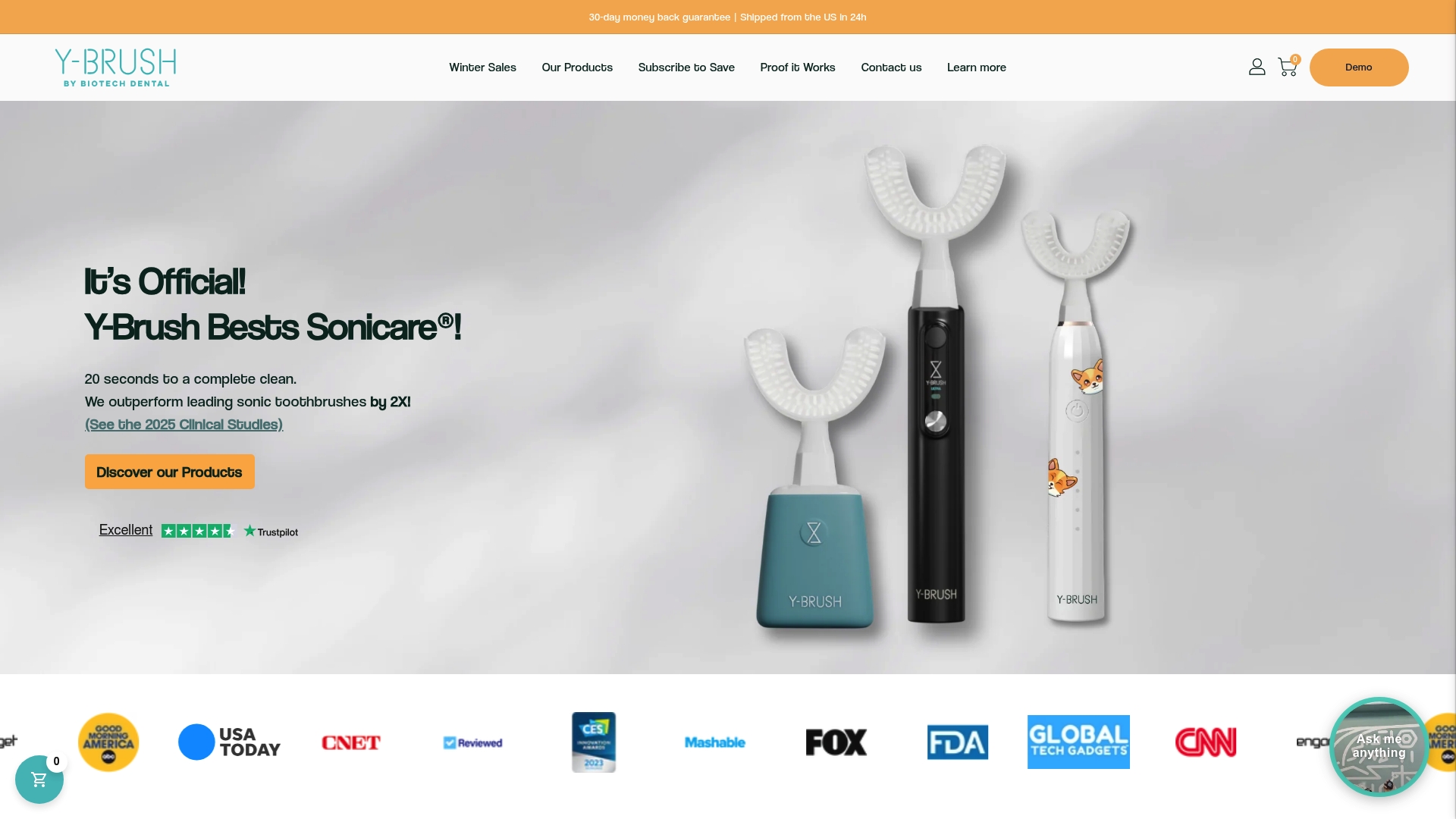
We offer three subscription options, the Core Plan, Pro Plan, and Pro+2 Plan, each including regular refills so you’re never stuck without a working brush head. If you already own a Y-Brush and just need replacement parts, our full lineup of toothbrushes and brush heads covers that too. Take a look at the plans and find the one that fits how your mornings actually go.
FAQ
What is the 3-3-3 rule for brushing teeth?
The 3-3-3 rule isn’t an official dental guideline, and definitions vary depending on the source. A common version suggests brushing for 3 minutes, 3 times checking different areas of the mouth, but the American Dental Association’s actual recommendation is two minutes, twice daily, with fluoride toothpaste.
What do Japanese use to brush their teeth?
Oral care practices vary by individual and region, and we don’t have a specific sourced answer for this question. In general, a soft-bristled brush and fluoride toothpaste remain the standard tools recommended by dental authorities worldwide.
What destroys teeth the most?
Frequent exposure to sugary and acidic foods or drinks, combined with inconsistent brushing, is the main driver of tooth decay and enamel erosion. Skipping fluoride toothpaste or rinsing it away immediately after brushing also reduces its protective effect, since fluoride needs time to work on enamel.
Do waterless toothbrushes work?
Yes, devices and techniques that skip water can still remove plaque effectively because the mechanical action of the bristles, not the water, does the cleaning. Clinical research on alternative brush designs shows they can outperform no brushing at all and offer a consistent option for people with limited dexterity or time.


