


Electric toothbrushes are sold at a range of price points. Once you factor in replacement heads every three to four months, as the American Dental Association recommends, ongoing costs depend on the price of replacement heads and the brush you choose. Sales events and subscription plans can push that number lower.
TL;DR:
- The ADA recommends replacing heads every three to four months, or sooner when bristles look worn; some dentists advise replacing them after serious illness.
- Estimate annual head costs by multiplying each replacement head’s price by the number you expect to buy, then add subscription fees and occasional charger or battery costs.
- App tracking and premium motors may add convenience or marketing appeal, but consistent technique and timely head changes matter more for plaque removal.
- Subscriptions simplify reordering, but save money only when their per head price beats bulk purchases; compare refill timing and cancellation terms before enrolling.
- Before buying a discounted brush, check its exact model, included accessories, and return policy, since an older model or smaller bundle may not be a better deal.
Table of Contents
- Retail price ranges and what you actually get at each tier
- How to calculate your real annual cost
- What drives the price up or down
- Where and when to buy for the best price
- Smart ways to lower your total cost
- A note on balancing upfront price and ongoing cost
- What the research actually tells shoppers to prioritize
- Y-Brush as a cost and convenience option worth comparing
- FAQ
- Sources
Retail price ranges and what you actually get at each tier
Shopping by price alone can be misleading, since two toothbrushes at the same price point may offer very different features. Entry-level models tend to cover the basics: a single cleaning mode, a basic timer, and a simple charging stand. Midrange brushes may add pressure sensors, multiple cleaning modes, and sometimes a travel case or an extra brush head. Higher-priced models often bundle app connectivity, pressure mapping, and multiple head attachments, though the core function of removing plaque doesn’t necessarily scale with the price tag.
Bundle contents move the sticker price as much as the technology does. A brush sold with four heads and a charging travel case will cost more than the same handle sold alone, even though the handle itself is identical.
- Entry-level: single mode, basic timer, and one brush head included.
- Midrange: pressure sensor, multiple modes, and often a travel case.
- Premium: app pairing, pressure mapping, and multiple heads included.
Color variants and limited-edition finishes can also raise the price of an otherwise identical model. A pastel or metallic edition sometimes costs several dollars more than the standard version with no change to the motor or brush head design, so it’s worth checking the product specs rather than assuming a higher price means better cleaning.
How to calculate your real annual cost
Sticker price only tells part of the story. The bigger driver of what you’ll spend over time is how often you replace the brush head, and the American Dental Association advises swapping heads every three to four months, or sooner if the bristles look worn. That means replacing heads regularly, with the actual number of replacements depending on when you start and whether the bristles wear sooner.
A simple formula covers most scenarios:
- Multiply the price per replacement head by the number of replacements you expect, based on how often you replace the head.
- Add any subscription fee, if you use one, instead of buying heads individually.
- Add occasional costs like a replacement charger or battery, which are rare in a given year but worth budgeting for over time.
Annual spending on heads depends on their price and how often you replace them, before subscription fees or accessories, based on the ADA’s replacement guidance.
Consumer Reports evaluated subscription services from Burst and Quip and found that subscriptions remove the guesswork of remembering to reorder heads. Burst users reported more flexibility in adjusting refill timing, while Quip users appreciated the compact design. Whether a subscription saves money depends on whether the per-head subscription price beats buying individually or in multi-packs.
What drives the price up or down
Not every feature that raises the price changes how clean your teeth get. Motor type and vibration frequency affect how a brush markets its cleaning power, but the biggest factor in plaque removal is consistent technique and replacing worn heads on schedule. App connectivity and smart tracking add convenience, like reminders and brushing history, without necessarily improving the clean itself.
- Motor and vibration technology: affects marketed cleaning power more than everyday results.
- App and smart features: add convenience and tracking, not necessarily better plaque removal.
- Proprietary or specialty head shapes: often cost more per replacement than standard round heads.
- Battery type: rechargeable lithium batteries last longer between charges than older NiMH batteries.
Pro Tip: Compare brushes by their annual replacement-head cost, not their headline motor specs. A cheaper handle with expensive proprietary heads can cost more over a year than a pricier handle with inexpensive heads.
Where and when to buy for the best price
Big-box retailers and online marketplaces give you the ability to compare models side by side, check current promotions, and return a brush that doesn’t fit your routine. Direct-to-consumer brands with subscription options often simplify the buying decision by bundling the handle with ongoing head refills, trading some price comparison for convenience. Retail category pages commonly let you filter by price and brand, which makes it easier to spot genuine markdowns.
- Holiday sales can bring discounts on name-brand handles.
- Major online shopping events may also include toothbrush deals.
- End-of-season clearance, when new models launch, can discount previous-generation brushes.
Before buying a “deal,” check the exact model number, confirm which accessories are included, and read the seller’s return policy. A discounted price on an older model with fewer included heads may not actually beat a slightly pricier bundle with more in the box.
Smart ways to lower your total cost
A few habits make a real difference in what you spend over time. Buying brush heads in multi-packs typically lowers the per-head price compared to single purchases. Sharing one charging base between two household members, each with their own head, cuts the upfront handle cost in half. Reputable retailers also sell open-box or refurbished handles at a discount, which can be worth it if the return window and warranty are clearly stated.
- First-year example: add the handle price to the cost of the replacement heads you expect to buy.
- Longer-term example: include the handle only when you buy it, then add the cost of replacement heads over time.
Consumer Reports found that sharing a base between two users can reduce the initial cost meaningfully, while subscription flexibility varies by provider, so it’s worth checking cancellation terms before committing.
A note on balancing upfront price and ongoing cost
Weighing a toothbrush purchase means looking past the price tag on the shelf and toward what you’ll spend over the following year. The replacement schedule the ADA recommends does more to shape your long-term spending than the handle’s original price. We’ve aimed to keep every figure here checkable against that guidance, and you can find more on general replacement timing for additional context.
What the research actually tells shoppers to prioritize
Most buying advice fixates on sticker price, but that number tells you almost nothing about what you’ll actually spend. The real decision point is the cost per replacement head multiplied by how often you’ll realistically swap it, and that math rarely appears next to the price tag in a store aisle.

Time’s reporting on replacement timing notes that dentists generally advise a new head about every three months, and sooner after a serious illness. That guidance matters more for your wallet than any motor specification, because it sets the baseline for how many heads you’ll buy in a year regardless of which brush you own.
Conventional advice treats subscriptions as an automatic upgrade for convenience, but convenience only has value if the subscription price beats buying in bulk. We’d encourage anyone comparing options to run the simple formula from earlier in this guide before committing to a recurring plan. The brush that wins on paper is rarely the cheapest one to buy. It’s the one with the lowest honest cost per year, including every head you’ll ever replace.
— Joris
Y-Brush as a cost and convenience option worth comparing
Weighing upfront price against yearly replacement costs is exactly the comparison we built our plans around. Our Core Plan, Pro Plan, and Pro+2 Plan offer subscription options for toothbrushes and brush head refills.
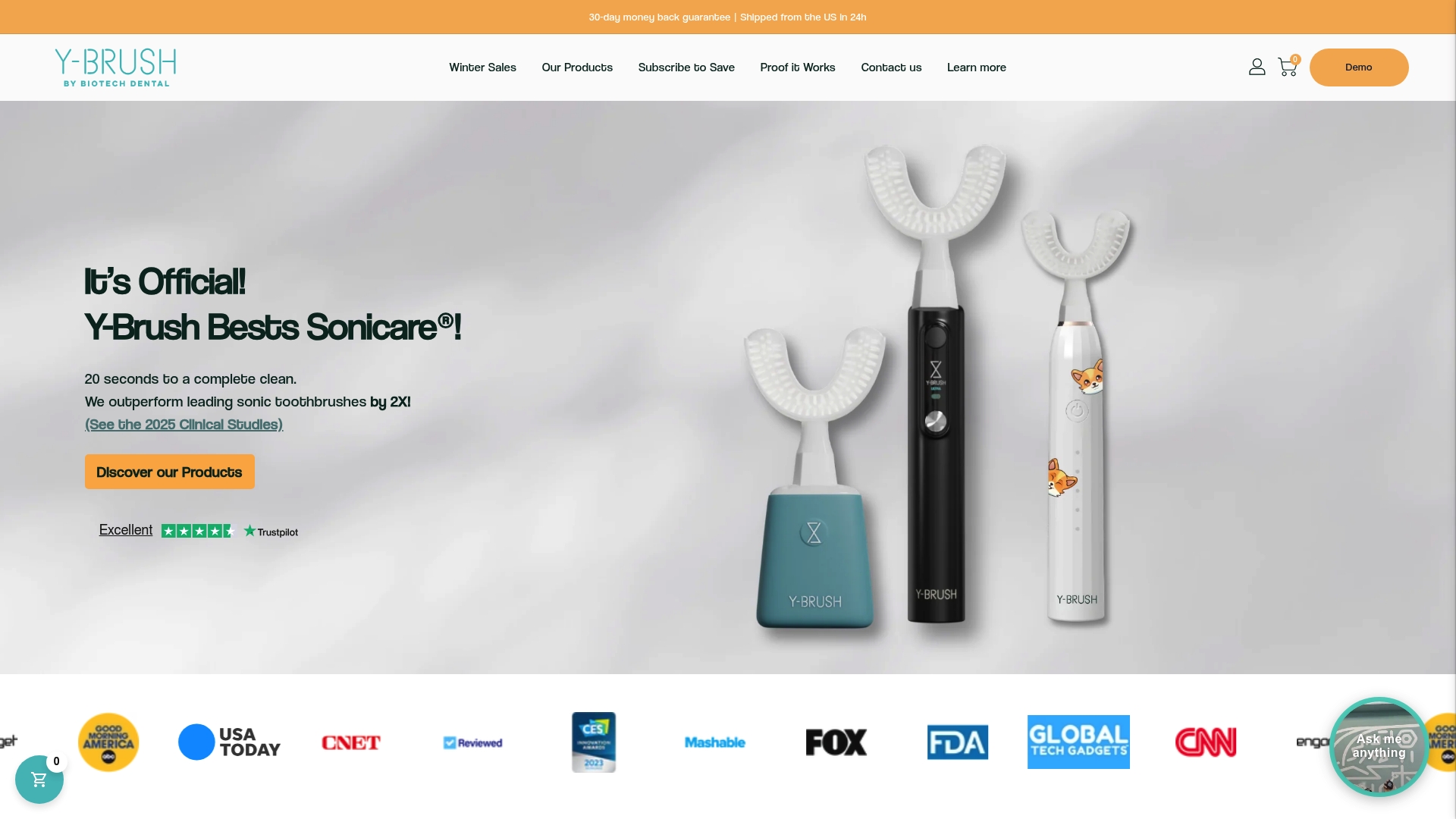
Our Y-shaped brush head is designed to deliver a complete clean in a short routine, a factor worth weighing alongside price when you’re comparing how much time and effort daily brushing takes. If replacement heads and subscription flexibility are part of your decision, our full product and brush head lineup shows current options side by side.
- Subscription plans are available for toothbrushes and ongoing head refills.
- The brushing design is intended to fit a complete clean into a shorter routine.
- Brush heads are available separately for anyone who wants to buy outside a plan.
Check current pricing and plan details on our toothbrush and plan page to see which option fits your budget.
FAQ
How much should you expect to pay for an electric toothbrush?
Electric toothbrushes are available at a range of price points. Your ongoing cost matters too, since replacement heads every three to four months, per the ADA, add to the total cost of ownership.
Are there sales on name-brand electric toothbrushes at major retailers?
Major retailers regularly discount electric toothbrushes during holiday sales, summer and fall shopping events, and clearance cycles when new models launch. Retailer category pages let shoppers filter by price and brand to compare current promotions.
Why do electric toothbrushes cost more than manual ones?
Electric toothbrushes include motors, batteries, and sometimes sensors or app connectivity that manual brushes don’t need, which raises both the upfront price and the cost of proprietary replacement heads. The tradeoff is a brush that can offer more consistent brushing patterns, though the ongoing cost of heads needs to factor into any comparison.
How often do you really need to replace a toothbrush head?
The ADA recommends replacing a toothbrush head every three to four months, or sooner if bristles look frayed. Time reports that some dentists also suggest a fresh head after a serious illness, while replacing after a minor cold is a low-cost precaution rather than a strict requirement.


