


Floss first, then brush: that’s the order supported by the American Dental Association, the CDC, and a randomized crossover trial showing it clears interdental debris so fluoride reaches more tooth surface. The sequence matters less than doing it daily, but when you have a choice, floss first.
TL;DR:
- The ADA recommends brushing twice daily with fluoride toothpaste for two minutes, while daily interdental cleaning should reach each contact point gently.
- A common guideline is to wait around 30 minutes before eating or rinsing, since vigorous water rinsing can wash fluoride from enamel.
- People with braces may need to clean between teeth more than once daily, using floss threaders or interdental brushes around brackets and wires.
- If flossing causes bleeding, continue gently each day; inflammation often improves within a week or two, while aggressive sawing can irritate gums.
Table of Contents
- What the Research Says About Brushing and Flossing Order
- Your Daily Routine: Floss, Brush, Rinse
- Flossing and Brushing Technique That Actually Works
- Special Cases: Kids, Braces, and Gum Disease
- Why Rinsing Timing Affects Your Fluoride Benefit
- Why This Habit Is Harder to Build Than It Sounds
- A Simpler Way to Handle the Two-Minute Brushing Step
- FAQ
- Sources
What the Research Says About Brushing and Flossing Order
The clearest evidence comes from a randomized crossover trial comparing both sequences in the same participants. Flossing before brushing reduced interdental plaque more effectively and left higher fluoride concentrations between the teeth than brushing first and flossing afterward. The likely explanation is mechanical: floss loosens trapped food particles and biofilm from contact points, so fluoride toothpaste reaches enamel that would otherwise stay coated in debris.

A separate single-blind trial published in BMC Oral Health found a similar pattern, with a measurable drop in plaque index specifically in the front teeth among people who flossed first. The effect was modest and concentrated in anterior regions, where floss contact tends to be more consistent, rather than a sweeping, universal advantage across the whole mouth.
A randomized crossover trial found that flossing before brushing increased interdental fluoride concentration compared with the reverse order, according to research published in PMC, giving the floss-first approach a real, if measured, edge.
What authorities agree on matters just as much as the order itself:
- The ADA recommends brushing twice daily with fluoride toothpaste and cleaning between teeth once a day.
- The CDC frames daily habit formation as the foundation of prevention, more than any single technique.
- Dental authorities note that the best time to floss is simply the time you’ll actually do it, because consistency outperforms a perfectly ordered routine done sporadically.
Your Daily Routine: Floss, Brush, Rinse
A simple four-step order turns this evidence into something you can do tonight without overthinking it.
- Clean between your teeth first. Use floss or an interdental brush once daily, working it gently into each contact point to clear food particles and plaque before brushing.
- Brush for two full minutes with a fluoride toothpaste, using gentle circular or short back-and-forth strokes rather than aggressive scrubbing.
- Clean your tongue with a brush or tongue scraper to reduce the bacteria that contribute to bad breath and plaque buildup.
- Wait before rinsing with water so the fluoride left on your teeth has time to work, and use mouthwash separately if your routine includes it.
Brush twice daily and clean between your teeth once daily, ideally at the same time each day so the habit sticks.
Pro Tip: Keep floss or interdental brushes next to your toothbrush, not in a drawer, so the first step never gets skipped.
Flossing and Brushing Technique That Actually Works
Order only helps if the technique behind each step is sound.
- Floss in a C-shape around each tooth, hugging the surface rather than snapping the floss straight down, and use a fresh section of floss for each gap.
- Focus on the contact point, the spot where two teeth touch, since that’s where plaque hides and brushing alone can’t reach.
- Consider interdental brushes or a water flosser if string floss feels difficult to maneuver, especially around back teeth or dental work; ease of use often matters more than which tool you pick.
- Brush at a 45-degree angle to the gumline with a soft-bristled brush, whether manual or powered, and let the bristles do the work instead of pressing hard.
Two common mistakes undercut otherwise good habits. Sawing floss aggressively against the gum can cause irritation without improving cleaning, so a gentle back-and-forth glide is enough. Rinsing immediately and vigorously after brushing washes away the fluoride before it can work on enamel.
Pro Tip: If your gums bleed when you floss, don’t stop. Bleeding usually means inflammation that improves within a week or two of consistent daily flossing.
Special Cases: Kids, Braces, and Gum Disease
A few groups need adjusted steps rather than the standard routine.
- Children: start brushing as soon as the first tooth appears, supervise brushing until they have the dexterity to do it alone, and begin flossing once two teeth touch, using only a rice-grain or pea-sized amount of fluoride toothpaste depending on age, per CDC guidance.
- Orthodontic patients: interdental brushes or floss threaders usually work better than standard floss around brackets and wires, and cleaning between teeth may need to happen more than once daily to prevent food trapping.
- Gum disease or high periodontal risk: follow your dentist’s specific instructions, which may include adjunctive tools like water flossers alongside standard brushing and flossing.
Why Rinsing Timing Affects Your Fluoride Benefit
Rinsing with water immediately and forcefully after brushing can wash away the fluoride layer before it has a chance to strengthen enamel. A commonly suggested guideline is to wait around 30 minutes before rinsing or eating, giving fluoride more contact time. Mouthwash adds another variable: some rinse ingredients can interact with toothpaste components, so it’s worth following the product’s own instructions on timing relative to brushing.
- Floss, then brush, then clean your tongue, then hold off on rinsing when you can.
- Reducing vigorous rinsing after brushing helps preserve topical fluoride contact with enamel, a practical takeaway echoed in ADA guidance on mouthrinse use.
Why This Habit Is Harder to Build Than It Sounds
The order of floss and brush matters less than whether you do both, every single day, without skipping. Most people who abandon flossing don’t quit because the evidence is unconvincing. They quit because the routine feels like one extra step at the end of an already tiring day. The fix isn’t more willpower, it’s placing the habit where it’s hardest to skip: next to the toothbrush, timed to something you already do without thinking, like watching the kettle boil.
— Joris
A Simpler Way to Handle the Two-Minute Brushing Step
Flossing first clears the way, but the two-minute brushing step is where most routines quietly fall apart. We built our product around that gap, featuring a design and technology intended to deliver a thorough clean in much less time than usual, so the step after flossing takes almost no time at all.
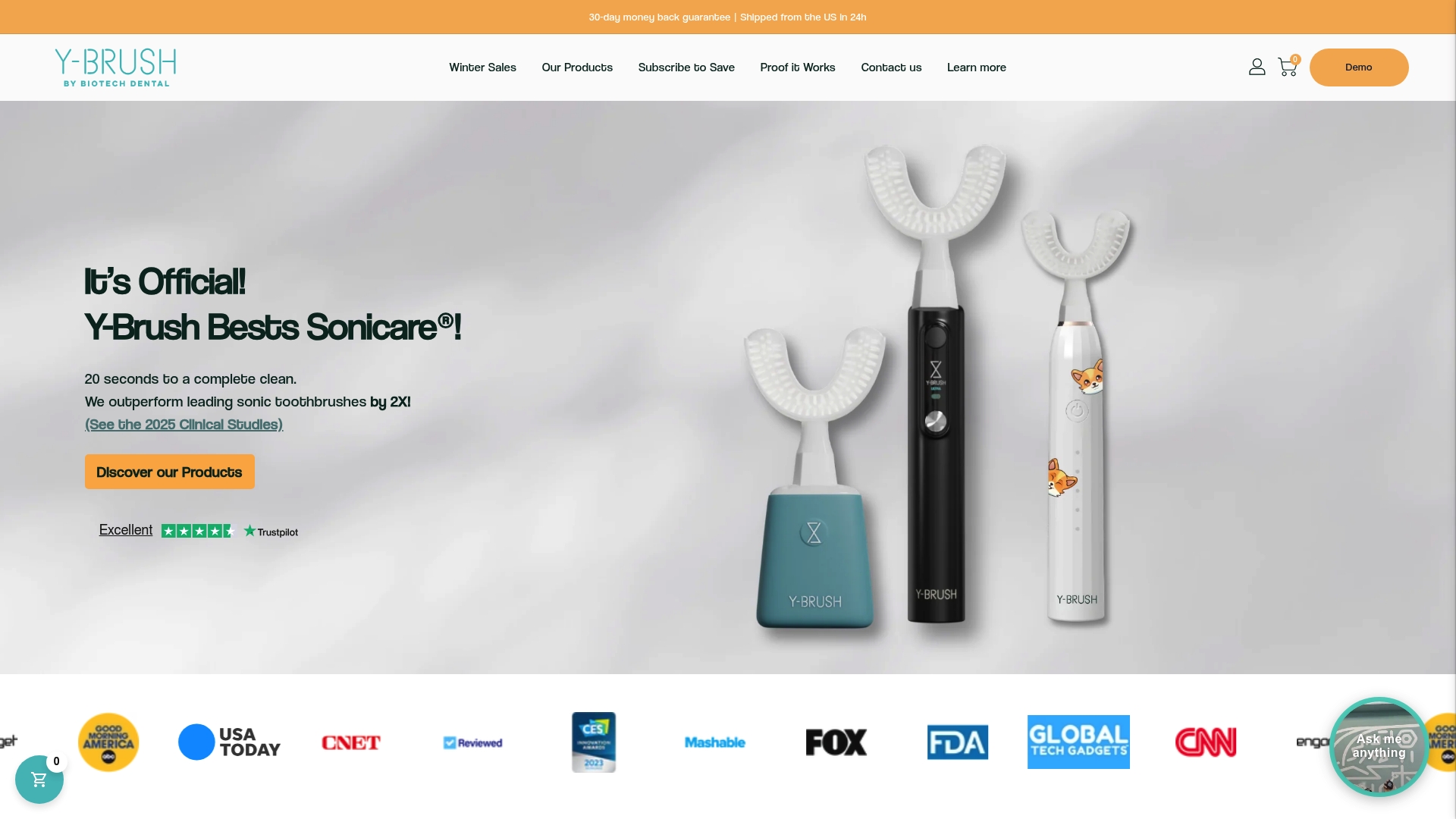
Once you’ve cleaned between your teeth and scraped your tongue, Y-Brush handles the brushing step in a fraction of the usual time, without asking you to change your technique.
- Core Plan and Pro Plan cover the toothbrush and refill essentials for one person.
- Pro+2 Plan extends coverage for households brushing together.
- Replacement Brush Heads and the full toothbrush lineup are available on our product collection.
Browse the full Y-Brush lineup to find the plan that fits your routine.
This article is general information, not a substitute for advice from a qualified doctor. Consult a qualified healthcare professional about your own circumstances before acting on anything here.
FAQ
Should I floss or brush my teeth first?
Floss first, then brush. A randomized crossover trial found flossing before brushing reduced interdental plaque and increased fluoride concentration between teeth compared with brushing first.
What is the 2 2 2 rule for brushing teeth?
There’s no single, universally recognized “2 2 2 rule” from the ADA or CDC; definitions vary across dental practices. A common version suggests brushing twice a day for two minutes, with a dental checkup roughly every two years, but your dentist’s recommendation for checkup frequency should take priority.
What is the correct order of dental hygiene?
Clean between your teeth once daily, brush for two minutes with fluoride toothpaste, then clean your tongue. The ADA recommends brushing twice daily and cleaning between teeth daily as the core routine.
Are you supposed to brush and floss before a dental checkup?
Yes, keep your normal routine of flossing and brushing before any dental visit, and consider reviewing available dental insurance plans to help manage the cost of regular checkups, since it gives your dentist a more accurate view of your everyday oral care. Skipping your routine beforehand doesn’t help your dentist and may make plaque or buildup look worse than it typically is.
What is the 3-3-3 rule for teeth?
There isn’t an established “3-3-3 rule” recognized by the ADA or CDC; this phrase varies by source and isn’t a standard clinical guideline. Stick to the ADA’s core recommendation instead: brush twice daily for two minutes and clean between your teeth once a day.


