


A replacement head fits your handle only if the attachment system, the handle generation and the head’s own design all match. Brand name alone is not enough. Heads from one maker often come in several incompatible families, and heads from different makers rarely swap without a purpose-built compatible design. The fastest way to be sure is to identify your handle’s model, match it to the head’s stated compatibility list, and confirm the head physically seats and runs without wobble.
This guide walks through how to do that, why some heads fit and others do not, what to know about generic heads, and how often to replace them.
TL;DR
- Compatibility depends on the attachment type (click-on, screw-on, push-on, or a proprietary mount), not on the brand logo alone.
- Find your handle’s model number in the manual, on the box, on the handle itself or under the charger before you order.
- Older handle generations often need their own head family, so a newer head may not fit an older handle even within one brand.
- Generic heads can work, but only when the listing names your exact handle and the head seats firmly with no play.
- Replace heads about every three months, or sooner if the bristles fray. A compatible head that fits your handle keeps that routine easy.
Table of Contents
- Why compatibility is more complicated than it looks
- The main attachment types you will run into
- How to identify your handle in five steps
- Do heads from different brands fit each other?
- Generic and third-party heads: when they make sense
- What about head shape and size?
- When to replace a brush head
- A practical way to avoid buying the wrong head
- Our perspective: compatibility should not be a puzzle
- Keeping heads fresh with a Y-Brush plan
- Special cases worth knowing
- Common mistakes
- FAQ
- Sources
Why compatibility is more complicated than it looks
Most people assume an electric toothbrush head is a simple part, like a battery size. It is not. A head is a small mechanical interface: it has to seat on the drive shaft or collar, stay locked during vibration, and transfer motion at the frequency the handle was designed for.
Three things decide whether a head works with a handle:
- The mount. This is the physical connection: the shape of the stem, the collar, any ridges, tabs or keyed notches.
- The motion type. Sonic handles vibrate the head side to side at high speed. Oscillating-rotating handles spin and pulse a round head. A head built for one motion does not behave properly on the other, even if you could force it on.
- The handle generation. Manufacturers update mounts over the years. A line that began with one system may later switch to another, and both stay in circulation in people’s bathrooms.
That third point explains most of the confusion. When someone asks whether “all heads from one brand fit all handles from that brand,” the honest answer is usually: most current ones do within a family, but not across every generation.
The main attachment types you will run into
You do not need to memorize model lines. You need to recognize the attachment style on your handle. Here is how the common systems differ.
| Attachment type | How it attaches | Typical motion | What to watch for |
|---|---|---|---|
| Click-on (snap-on) | The head presses onto a keyed stem and clicks into place | Sonic | Very common on current sonic handles; older generations may use a different stem |
| Screw-on | The head threads onto the handle collar | Sonic | Found on some older sonic models; a click-on head will not thread on |
| Push-on, round head | A small round head pushes onto a thin shaft | Oscillating-rotating | Different lines within a brand can use different shaft or head styles |
| Proprietary mount | A keyed or magnetic interface unique to one handle line | Varies | Only heads designed for that handle fit |
The lesson: matching the label “fits click-on handles” is a good first filter, but it still does not prove your specific handle takes that head. Click-on is a family of designs, not one universal part.
How to identify your handle in five steps
If you do not know what you own, work through this checklist in order. Most people find the answer by step two.
- Check the base of the handle. Many handles have a model number or type code printed or molded into the underside or lower body. A small flashlight helps.
- Look under the charger or on the charging base. Chargers frequently carry a model or type number, and it is often the same as, or closely related to, the handle’s.
- Find the original box or manual. Packaging and manuals list the model and often name the compatible head family. If you registered the product, check your email for the order confirmation.
- Photograph the head attachment area. Remove the current head and take a clear photo of the stem or collar. Compare it to the pictures on a head listing, looking at the keying shape, ridges and diameter.
- Match the model to a compatibility list. Use the list on the head seller’s product page, and make sure it names your handle line, not only a general category.
A 2017 replacement-head guide drawn from owner documentation made a point that still holds: older systems need model-specific matching, with certain head families fitting some older handle lines and not others. If your handle is a decade old, assume you need to confirm the match rather than guess.
Do heads from different brands fit each other?
This is the question that brings many people to a search box, and it takes a few forms. Do heads from the leading oscillating-rotating brand fit the leading sonic brand? Do all heads in one brand’s lineup fit every handle in that lineup, including its newest generation?
The short answers:
- Across brands, original heads generally do not fit. The mounts differ, and so does the motion the head was engineered for. Forcing one on risks a loose fit, poor cleaning and possibly damage to the handle’s shaft.
- Within a brand, it depends on the line. Current handles in the same family usually share a head type, but newer generations sometimes introduce a new mount. Always check the exact handle name against the head’s list rather than assuming.
- Compatible heads are the exception. Some makers deliberately design heads to work with another brand’s mount. These are labeled as compatible with named handles, and they are the only cross-brand option that is designed to fit.
The rule of thumb: if the packaging does not say your handle’s model or family by name, treat it as not confirmed.
Generic and third-party heads: when they make sense
Generic heads are popular because original heads can be expensive over time. Reader discussions about replacement heads regularly point out that cheaper alternatives exist and many users find them acceptable. That can be true. The risk is not that all generics are bad, but that quality and fit vary widely.
Before you buy a non-original head, run it through this filter:
- Named compatibility. The listing should name your handle line or model, not just say “fits most electric toothbrushes.”
- Secure seating. The head should push or click on and stay firmly in place. If it spins loosely, rocks, or pops off while running, stop using it.
- Normal sound and feel. An unusual rattle or a noticeably weaker vibration suggests a mismatch in the mount or drive.
- Bristle quality. Look for stated bristle material and soft or medium stiffness. Soft bristles are the safer default if you have sensitive gums.
- Clear return policy. If it does not fit, you should be able to send it back.
A compatible head that seats correctly can be a sensible way to keep a handle you already like. A head that nearly fits is worse than none: it can cut your cleaning effectiveness and wear the handle’s mount.
What about head shape and size?
Compatibility answers whether a head attaches. A separate question is whether the head shape suits your mouth. Heads differ in size, bristle layout, bristle stiffness and overall profile. Smaller heads reach back molars more easily. Larger heads cover more surface per pass but can feel awkward in a small mouth, and children generally need compact heads sized for them.

At Y-Brush, the head is the core of the design. Our patented Y-shaped head is built to clean several surfaces at once, which is how we aim to deliver a complete clean in 20 seconds rather than relying on two minutes of manual coverage. Shape matters beyond fit because the head defines how much of each tooth the bristles touch per second.
When to replace a brush head
Fit is only half of the maintenance question. A head that fits but is worn out cleans poorly. The American Dental Association recommends replacing your toothbrush or brush head every three to four months, or sooner if the bristles become frayed or splayed. It also applies after an illness, if you want a fresh start.
Signs a head is done:
- Bristles lean outward or look flattened.
- The color indicator, if there is one, has faded.
- It has been more than three months, even if it looks fine. Wear is not always visible.
- You have been sick and want to avoid reintroducing bacteria.
Because most people forget, tie replacement to a recurring event. A quarterly refill schedule does that automatically, which is one reason we built plans around it. For context on how routine care and replacement choices fit into everyday oral hygiene, this oral hygiene information page from a Washington, DC dental practice covers the basics clearly.
A practical way to avoid buying the wrong head
Here is a short routine that prevents most wrong purchases.
- Write down your handle’s model number and take a photo of the stem area before you shop.
- Search the listing for your exact model, not just the brand name.
- Confirm the attachment type: click-on, screw-on, push-on or proprietary.
- Check the pack size and how many months of use it covers. A four-pack typically lasts about a year at a three-month interval.
- On arrival, test the fit before removing all packaging if the return policy allows it. Seat the head, run the handle without toothpaste, and listen for rattles.
- If anything feels loose, return it.
This takes about five minutes and saves the common frustration of a head that clicks halfway and wobbles.
Our perspective: compatibility should not be a puzzle
We design around a simple belief. Most people know they should brush for two full minutes, yet a typical brushing session lasts under one minute. A toothbrush that fits how people live has to remove as much friction as possible, and swapping heads is a source of friction that rarely gets discussed.
When a head does not fit, people do one of three things. They keep using a worn head because ordering feels like homework. They buy the wrong part and give up. Or they force a near-fit that cleans poorly. Each outcome is worse for oral health than a simple, predictable replacement.

That is why we think about heads as a system rather than an afterthought. Our Y-shaped head is meant to deliver a thorough clean in 20 seconds via sonic vibrations, and we sell replacement heads and membership plans so the next head arrives when it is due. We also offer compatible brush heads for other brands, for people who already own a handle they like and want a straightforward way to keep it running.
Our advice, whichever handle you own: identify the model, match it by name, check the fit on arrival and replace on schedule. A brush that fits and is fresh will outperform an expensive one that is worn out.
— Joris
Keeping heads fresh with a Y-Brush plan
If you would rather not track model numbers and replacement dates, our plans handle the rhythm for you. Y-Brush offers three quarterly plans:
| Plan | Price |
|---|---|
| Core Plan | $29.90 per quarter |
| Pro Plan | $49.90 per quarter |
| Pro+2 Plan | $69.90 per quarter |
The plans include regular refills so you are not waiting until the bristles fail. You can compare them on our toothbrush plans page.
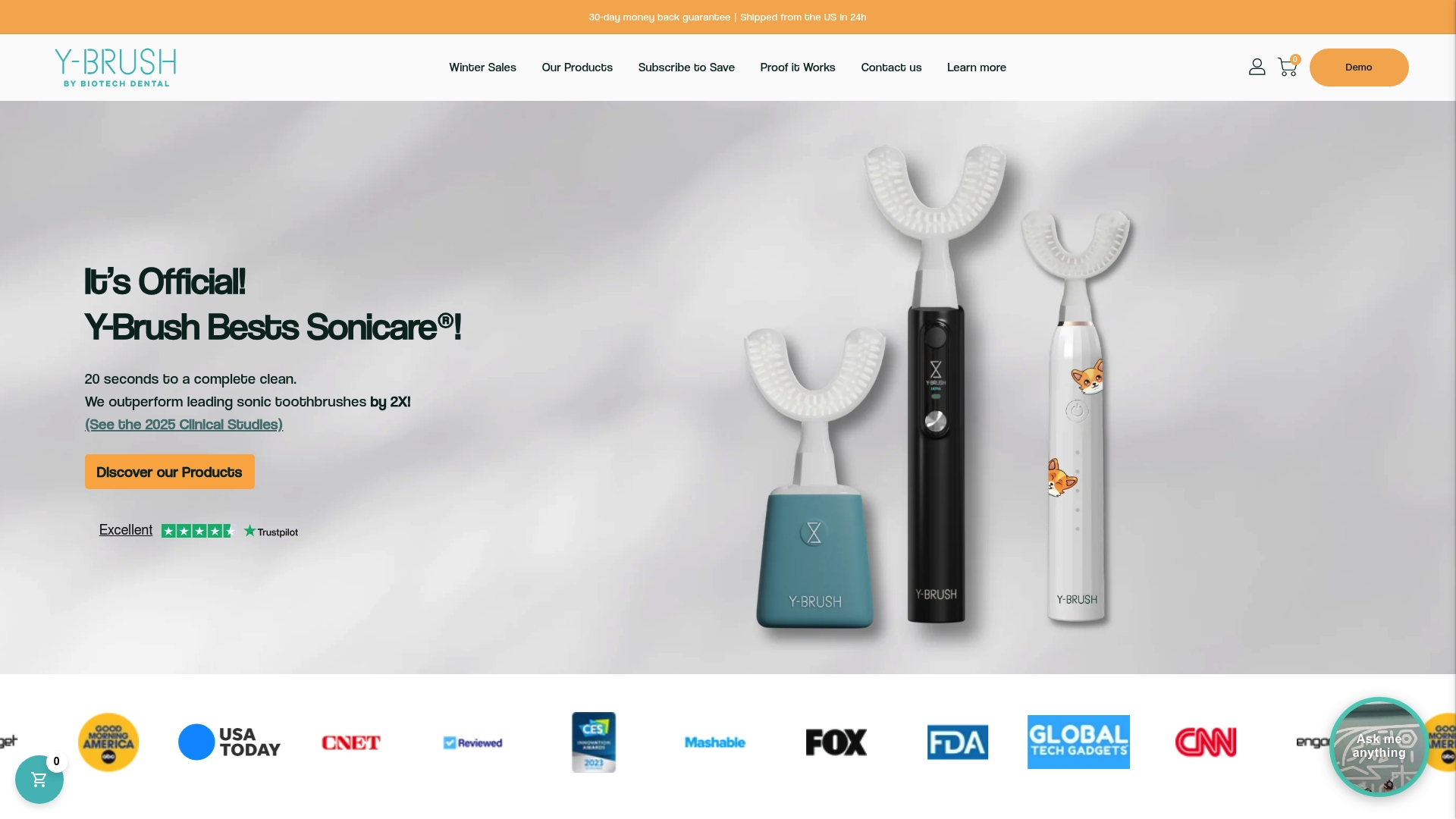
Already own a handle and just need heads? Browse Y-Brush brush heads and toothbrushes to see what fits your setup. Our patented Y-shaped design is, by our own claim, clinically proven to remove plaque 2X more effectively than leading sonic toothbrushes, and our subscription-based lifetime warranty backs the plan.
Special cases worth knowing
Older handles
If your handle is many years old, the head family it takes may no longer be the one stocked in stores. Look for the model number first. If you cannot find any head that names your handle, it may be time to replace the handle rather than hunt for discontinued parts.
Children’s handles
Children’s heads are smaller and usually softer, and they are often tied to a specific handle. Do not put an adult head on a child’s handle unless the maker says it fits. Smaller heads help kids reach back teeth, and a poor fit is a safety concern if a part comes loose, so check that heads stay firmly attached.
Smart and app-connected handles
Some handles identify the head through a chip or a magnetic sensor to track usage or remind you to replace it. A head without that feature may physically fit but disable the reminder or tracking. If you rely on those features, check that the replacement supports them.
Travel and spare handles
If you keep a second handle for travel, check that both take the same head. Sharing one head type between handles simplifies ordering.
Common mistakes
- Buying by color or appearance. Similar-looking heads can have different stems.
- Trusting “universal” claims. True universal fit is rare for electric heads.
- Ignoring wobble. A loose head will not clean as well and may stress the handle.
- Waiting for visible wear. Bristles lose effectiveness before they look ruined.
- Mixing motion types. A round oscillating head belongs on an oscillating handle, and a sonic head on a sonic handle.
FAQ
Do Oral-B heads fit Philips Sonicare handles?
Generally no. Original heads from the two big systems use different mounts and are built for different motions, one oscillating-rotating and one sonic. Only a head that is explicitly labeled as compatible with your named handle is designed to fit.
Do all heads from one brand fit all of that brand’s handles?
Not always. Within one brand, current handles often share a head type, but older generations and newer lines can use different mounts. Match your exact handle model to the head’s compatibility list before buying.
Are generic replacement heads safe to use?
Many work fine when they name your handle and seat firmly. Avoid any head that wobbles, rattles or pops off during use. Choose soft bristles if your gums are sensitive, and see your dentist if you notice bleeding or soreness that persists.
How do I know which head my handle takes?
Check the handle’s underside, the charger, the manual or the box for a model number. Then match that number to a head listing that names it. If you cannot find a number, compare a photo of the stem to the listing’s pictures.
How often should I replace my electric toothbrush head?
Every three to four months, according to the American Dental Association, or sooner if bristles fray. A scheduled refill plan can help you stay on time.


