


You can remove plaque at home, and you should do it every day. Plaque is the soft, sticky film that forms on your teeth, and thorough brushing plus daily cleaning between your teeth is how you take it off. Once plaque hardens into tartar, though, only a dentist or hygienist can remove it. So the goal at home is simple: disrupt plaque every day, before it has time to harden.
This guide covers the routine that does that, the tools that help in hard-to-reach places, the home “hacks” to skip, and the signs that mean it is time to book a dental visit.
TL;DR
- Plaque is a soft bacterial film you can remove at home with brushing twice a day and cleaning between your teeth once a day. Tartar is hardened plaque and needs a professional cleaning.
- Use a soft-bristled brush, fluoride toothpaste and a full two minutes. A brush with a built-in timer makes the two minutes easier to hit.
- Floss or another interdental cleaner reaches what bristles cannot. A water flosser can add to this routine but does not replace string floss.
- Skip scrapers, fingernails, vinegar rinses and other shortcuts. They do not remove tartar and can hurt your gums and enamel.
- Bleeding, swollen or tender gums, persistent bad breath or loose teeth call for a dentist soon.
Table of Contents
- What plaque is and why it matters
- The daily routine that removes plaque at home
- Tools for hard-to-reach areas
- Why your toothbrush matters
- Perspective
- What not to do: scraping, fingernails and kitchen remedies
- When to see a dentist
- A simple plan for the first two weeks
- How Y-Brush fits into plaque control
- FAQ
- Sources
What plaque is and why it matters
Dental plaque is a sticky, colorless film of bacteria. According to the National Institute of Dental and Craniofacial Research (NIDCR), plaque buildup can lead to tooth decay and gum disease. It starts forming again within hours of cleaning, which is why a single big scrub does not solve the problem. A steady daily routine does.
The timing matters because plaque changes over time. NIDCR explains that tartar (also called calculus) is plaque that has absorbed calcium from saliva and hardened. The purpose of brushing and flossing is to disrupt plaque before that happens.
Plaque vs. tartar
| Plaque | Tartar (calculus) | |
|---|---|---|
| What it is | Soft, sticky film of bacteria and food particles | Plaque that has hardened with minerals from saliva |
| Can you remove it at home? | Yes, with brushing and cleaning between teeth | No |
| Who removes it | You, daily | A dentist or dental hygienist with professional instruments |
NIDCR is clear on the last row: the only way to remove tartar is a cleaning by a dentist or hygienist, because brushing and flossing cannot take it off once it forms. That is why the daily routine below is built around prevention. Every day you clear plaque is a day it does not become tartar.
The daily routine that removes plaque at home
Step 1: Brush twice a day for two minutes
MedlinePlus advises brushing at least twice a day, for at least two minutes each time, with a medium-to-soft rounded-bristle brush and a fluoride toothpaste that is not too abrasive. Cleveland Clinic goes a step further and recommends soft or extra-soft bristles, noting that hard or medium bristles can wear away enamel and the gum line.
Here is how to brush well:
- Angle the bristles toward the gumline.
- Use gentle, small circular motions, as NIDCR describes. Pressing hard does not clean better.
- Cover every surface: outside, inside and chewing surfaces, in every quadrant of your mouth.
- Keep going until two full minutes have passed.
Two minutes is where most people fall short. A typical brushing session is closer to one minute, and plaque left behind along the gumline is exactly what turns into tartar.
Step 2: Clean between your teeth once a day
Toothbrush bristles cannot clean effectively in the tight spaces between teeth. The American Dental Association (ADA) says floss or another interdental cleaner is needed to remove the plaque film along the gumline there. NIDCR recommends cleaning between teeth at least once a day.
The flossing technique from HRSA and NIDCR goes like this:
- Ease the floss gently between two teeth until it reaches the gumline. Do not snap or force it.
- Curve it into a “C” against one tooth.
- Slide it up and down, including slightly under the gum.
- Repeat on the neighboring tooth, then move on to a clean section of floss.
- Floss both sides of every tooth, including the backs of the last teeth.
Step 3: Pick a time you will actually keep
The ADA says the best time to floss is whatever fits your schedule, before or after brushing, as long as the cleaning is thorough. Cleveland Clinic suggests flossing at night before brushing. Either way, consistency beats perfection. A routine you keep on a tired Tuesday is worth more than a perfect one you drop.
Tools for hard-to-reach areas
Some spots collect plaque more stubbornly: behind the lower front teeth, around the back molars, along crowded or crooked teeth, and around bridges or braces. The right tool depends on your mouth and your hands.
| Tool | Best for | Notes |
|---|---|---|
| String floss | Tight contacts between teeth | Reaches under the gumline when used with the “C” technique |
| Interdental brushes | Wider gaps, around bridges and braces | Small brushes sized to the space |
| Floss picks or holders | Reaching the back teeth, limited dexterity | Easier to handle than string |
| Floss threaders | Bridges and braces | Guide floss under fixed hardware |
| Water flosser | Adding to your routine, hard-to-floss areas | Does not replace string floss |
The ADA lists floss, small brushes, wooden or plastic picks, floss holders, floss threaders and water flossers as acceptable interdental options. HRSA also points to holders, threaders, water flossers and interdental brushes for people who find manual flossing difficult.
Does a water flosser remove plaque?
It can help. The ADA says water flossers can add benefits in plaque reduction when used with conventional brushing. MedlinePlus notes that water irrigation can flush debris from between teeth and under the gums, which may help control bacteria there. Cleveland Clinic’s guidance is practical: use a water flosser in addition to string floss, not instead of it.
If you wear dental implants or have had major restorative work, daily cleaning around them matters just as much as on natural teeth. This overview of dental implant maintenance explains how the upkeep works over time.

Why your toothbrush matters
The routine above works with any soft-bristled brush, but your brush decides how well you handle the first step. MedlinePlus states that electric toothbrushes have been shown to clean teeth better than manual brushes, and that some include timers that tell you when two minutes are up.
That timer solves a real problem. Most people know they should brush for two minutes and most do not. When a brush counts the time for you, you stop guessing.
When you choose a brush, look for:
- Soft bristles. Gentle on enamel and gums, in line with the guidance above.
- A built-in timer. It takes the guesswork out of the two minutes.
- A head shape that reaches the gumline and back teeth. Plaque collects where brushes reach least.
- Replaceable heads. Worn bristles clean less well, so a regular head-replacement schedule belongs in your routine.
Perspective
We built Y-Brush around one observation: people know they should brush for two full minutes, yet most do not, and a typical brush is under a minute. A routine that only works for people with perfect habits is not a routine that works for most people.
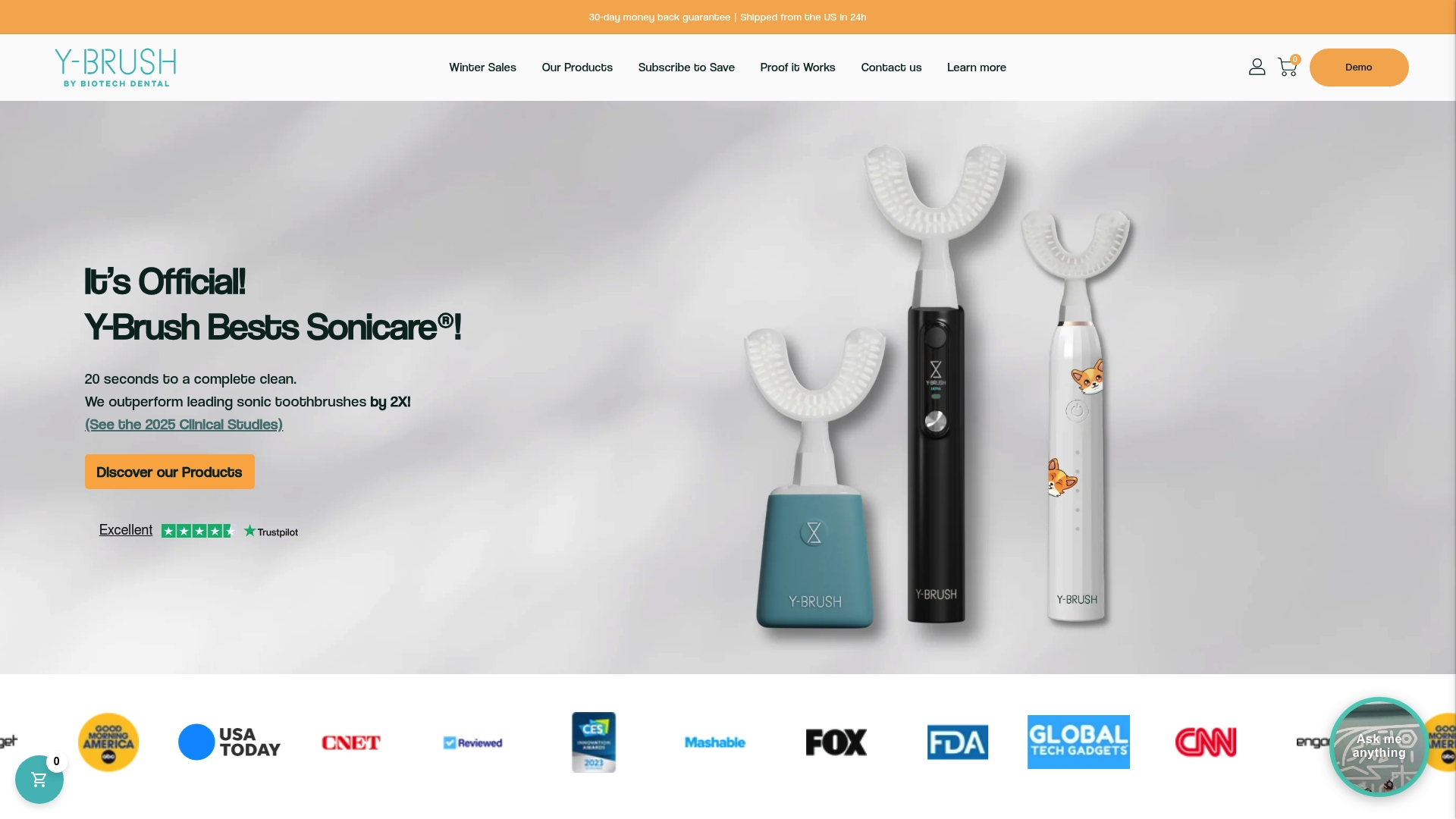
That is why our patented Y-shaped brush head is designed to deliver a complete clean in 20 seconds using sonic vibrations. The shape is designed to clean multiple surfaces at once, so the clean fits into a busy morning, a late night or a day that went sideways. Our positioning is that the clean is dentist-approved and clinically proven to remove plaque 2X more effectively than leading sonic toothbrushes.
We still believe in the basics. Cleaning between your teeth every day matters, and so do regular dental visits. What we offer is a faster, better brushing step, so the plaque you can remove at home actually gets removed. We back it with a subscription-based lifetime warranty and regular head refills, so a fresh head is always on the way.
Joris
What not to do: scraping, fingernails and kitchen remedies
Search results are full of shortcuts. Here is how to think about them.
Scrapers, picks and fingernails
Dental scalers and plaque scrapers are sold online, but hygienists train to use them. NIDCR says tartar removal takes professional instruments in a dentist’s or hygienist’s hands. Metal tools, a pin or a fingernail used blindly near the gumline can scratch enamel, cut the gums and push bacteria below the gumline. If you can feel a rough, hard ridge on your teeth, that is tartar, and the safe move is to book a cleaning.
Vinegar, baking soda and other remedies
You will see rinses of vinegar, salt or lemon suggested for removing tartar. Tartar is mineralized and bonded to the tooth, and the authoritative guidance says only professional cleaning removes it. Acidic rinses add a different risk, since acid can wear at enamel. Spend that effort on a better brushing technique and daily interdental cleaning.
Brushing harder
More pressure does not mean more plaque removal. Cleveland Clinic warns that hard or medium bristles can wear away enamel and the gum line. Gentle circles with soft bristles do the work.
When to see a dentist
Home care handles plaque. It cannot handle tartar, and it cannot diagnose gum disease. Book a dental appointment if you notice:
- Swollen, puffy or tender gums
- Gums that bleed easily when you brush or floss
- Bad breath that does not go away
- Gums that look discolored
- Loose teeth
Mayo Clinic lists swollen or tender gums, bleeding when brushing or flossing, and bad breath as symptoms of gingivitis, and recommends seeing a dentist as soon as possible, since earlier care improves the chances of reversing damage. For periodontitis, the symptoms also include gums that bleed easily, discolored gums and loose teeth or tooth loss, and the advice is the same: make an appointment as soon as possible.
Mayo Clinic also describes the progression: plaque hardens into tartar under the gumline, the tartar irritates the gums, and untreated gingivitis can advance to periodontitis, with deep pockets and loss of tissue and bone. Regular professional cleanings clear the tartar your daily routine cannot, and your dentist can tell you how often you need one.
A small note on bleeding: if your gums bleed when you start flossing regularly, do not stop. Keep the technique gentle and raise it at your next visit, or sooner if it persists or comes with swelling or pain.
A simple plan for the first two weeks
Changing habits is easier with a plan. Here is a realistic starting point.

Days 1 to 3: Fix the basics. Switch to a soft-bristled brush if you are not using one. Brush with fluoride toothpaste morning and night. Set a timer if your brush does not have one.
Days 4 to 7: Add one interdental step. Pick one tool: floss, a floss pick or an interdental brush. Use it once a day, at the same time each day, such as after your evening brushing.
Days 8 to 14: Refine. Pay attention to the spots you miss: the backs of the lower front teeth, the outer surfaces of the back molars, and any crowded areas. Add a water flosser if string floss is hard for you, keeping the string floss where you can.
After two weeks, the routine is usually automatic. Schedule a dental cleaning if you do not have one booked, because that visit takes care of what home care cannot.
How Y-Brush fits into plaque control
If the two-minute step is where your routine breaks down, we designed Y-Brush for that moment. Our Y-shaped head uses sonic vibrations to deliver a complete clean in 20 seconds, and we back it with a subscription-based lifetime warranty. Your plan keeps fresh heads arriving on a regular schedule, so you are never brushing with worn bristles.
Three plans are available at our toothbrush plans page:
| Plan | Price |
|---|---|
| Core Plan | $29.90 per quarter |
| Pro Plan | $49.90 per quarter |
| Pro+2 Plan | $69.90 per quarter |
We also offer replacement and compatible brush heads. You can browse them in all Y-Brush products. Our brush supports the brushing step, and your interdental cleaning and dental visits cover the rest.
FAQ
Can I remove plaque from my teeth by myself?
Yes. Plaque is a soft film, and brushing twice a day for two minutes plus cleaning between your teeth once a day removes it. What you cannot remove yourself is tartar, which is hardened plaque. That takes a professional cleaning.
Can I remove plaque without a dentist?
Fresh plaque, yes: that is the point of your daily routine. Tartar, no. NIDCR states that the only way to remove it is a cleaning with professional instruments by a dentist or hygienist. Keeping up the daily routine reduces how much tartar a cleaning has to deal with.
Does a water flosser remove plaque?
A water flosser can add to plaque reduction when used with brushing, according to the ADA. It flushes debris from between teeth and under the gums. Cleveland Clinic advises using it alongside string floss rather than replacing it.
How do I clean plaque from hard-to-reach spots?
Use an interdental cleaner, since bristles cannot reach well between teeth. Options include string floss, interdental brushes, floss picks, floss holders, floss threaders and water flossers. If flossing by hand is hard, a holder or water flosser can make it easier.
When should I see a dentist about plaque?
See one if your gums are swollen, tender or bleed easily, if you have lasting bad breath, or if your teeth feel loose. Mayo Clinic says earlier care improves the chances of reversing gum damage. Also keep up regular cleanings to remove any tartar.
Sources
- Oral Hygiene, National Institute of Dental and Craniofacial Research
- Ask the Expert: Do I Really Need to Floss?, NIDCR
- Oral Health for Adults, HRSA
- Plaque and tartar on teeth, MedlinePlus
- How To Remove Plaque From Teeth, Cleveland Clinic
- Dental Floss/Interdental Cleaners, American Dental Association
- Gingivitis: Symptoms and causes, Mayo Clinic
- Gingivitis symptoms and causes (progression), Mayo Clinic
- Periodontitis: Symptoms and causes, Mayo Clinic


