


If your teeth feel fuzzy minutes after you brush, you are not doing something wrong in the way you think. Plaque is a living film of bacteria that starts re-forming as soon as you finish cleaning, so the goal is not to get rid of it forever. The goal is to disrupt it thoroughly and often, in the places a brush tends to miss. Below, we explain why plaque returns, what turns it into tartar, which habits make the biggest difference, and when a dental visit is the right next step.
TL;DR
- Plaque is a sticky bacterial film that comes back within hours of brushing, which is normal. What matters is removing it thoroughly every day.
- A fuzzy or slimy feeling usually means plaque is sitting on surfaces or between teeth that the brush did not fully reach.
- Once plaque hardens into tartar, brushing and flossing cannot remove it. Only a dental professional can.
- Cleaning between teeth daily, brushing with fluoride toothpaste, limiting frequent snacking and replacing your brush head every 3 to 4 months all help.
- An electric brush with a head designed for coverage can make thorough cleaning easier to repeat every day.
Table of Contents
- Why plaque comes back so quickly after brushing
- Why your teeth feel fuzzy or unclean after brushing
- Plaque vs. tartar: what brushing can and cannot remove
- What can cause plaque to build up even when you brush regularly
- How to remove more plaque each day
- Does an electric toothbrush help with plaque?
- When to see a dentist about plaque or tartar
- A realistic plan for the next 30 days
- Make thorough cleaning easier with Y-Brush
- FAQ
- Sources
Why plaque comes back so quickly after brushing
Plaque is not leftover food. It is a community of microbes that works together. According to the National Institutes of Health, these microbes make a slimy, sticky material called a matrix that protects them and makes plaque harder to remove. After you brush and floss, germs grow again and more plaque forms, which is why oral care has to be a regular habit rather than a one-time fix.
The timeline is shorter than most people expect. MedlinePlus notes that plaque begins to build up within a few minutes after eating. Researchers writing in The Conversation describe plaque biofilms re-growing within hours of brushing, which is the reason dental guidance centers on twice-daily brushing.
So if you search for answers because plaque keeps coming back, the first piece of reassurance is that regrowth is biology, not failure. The second is that the amount of plaque you carry between brushing sessions is something you can influence.
Why your teeth feel fuzzy or unclean after brushing
That fuzzy, slippery or “sweater” feeling is typically the plaque layer itself. Because plaque is a structured biofilm rather than loose debris, it feels slick or slimy against your tongue, different from the gritty feel of a food particle.
Three situations explain most cases of teeth that feel not clean after brushing:
- Missed surfaces. A toothbrush cannot reach well between teeth. Cleveland Clinic points out that flossing removes plaque between your teeth where your toothbrush doesn’t reach.
- Too short a session. The American Dental Association reports that systematic reviews found two minutes of brushing was associated with a greater plaque reduction than one minute. Many people brush for well under that.
- Hardened deposits. If a rough or gritty patch does not go away after thorough brushing, it may be tartar, covered below.
The lingering feeling can also come from a dry mouth, because saliva helps rinse away bacteria and acids. If your mouth is often dry, mention it to your dentist, since it can speed up plaque buildup.
Plaque vs. tartar: what brushing can and cannot remove
This distinction explains why some people brush faithfully and still see buildup.
| Plaque | Tartar (calculus) | |
|---|---|---|
| What it is | Soft, sticky, colorless film of bacteria | Hardened, mineralized plaque |
| Where it shows up | All tooth surfaces, between teeth, along the gumline | Often at the base of the tooth, near or under the gumline |
| Can brushing and flossing remove it? | Yes, if done thoroughly and regularly | No |
| Who removes it | You, daily | A dentist or hygienist |
MedlinePlus explains that plaque left in place will harden and turn into tartar. The ADA adds that tartar is a hard mineral deposit that can only be removed through cleaning performed by a dental professional. Mayo Clinic says the same: plaque that stays on your teeth can harden under the gumline, and you need a professional dental cleaning to remove it.
One practical note: tartar tends to collect first in spots that are easy to miss, such as the backs of the lower front teeth, next to where saliva glands open. If you run your tongue there and feel a rough ledge that does not budge, that is a good cue to book a cleaning rather than brush harder. Scrubbing harder does not remove tartar, and it can irritate your gums.
What can cause plaque to build up even when you brush regularly
Brushing twice a day is the baseline, but several factors determine how much plaque you carry.
Technique and coverage
Most people spend less time than they think, and most miss the same areas: inner surfaces of the lower teeth, the back molars and the gumline. The ADA expresses two minutes as about thirty seconds per quadrant or roughly four seconds per tooth. Dividing your mouth that way is an easy structure to follow.
Snacking and sugar
Some microbes turn sugar into matrix and acid. The NIH explains that the more sugar in your diet, the more fuel is available for microbes to build up plaque. MedlinePlus advises avoiding snacking between meals, especially on sticky or sugary foods, and brushing after any evening snack. It also suggests not eating or drinking anything except water after brushing before bed.
Skipping the spaces between teeth
If you brush well but never clean between teeth, the contact points stay coated. The ADA recommends cleaning between teeth once a day with floss or another interdental cleaner.
Dry mouth, braces and rough surfaces
The Conversation notes that rough areas on a tooth, spots a brush cannot reach, and braces can all make it easier for microbes to grow. Mayo Clinic lists dry mouth, certain medicines and smoking as risk factors that may mean you need professional cleanings more often.
A worn-out brush
MedlinePlus recommends replacing your toothbrush every 3 to 4 months, and changing electric brush heads on the same schedule, because a worn-out toothbrush will not clean your teeth as well. Frayed bristles are one of the easiest causes to fix.
How to remove more plaque each day
Here is a routine built from guidance by the ADA, MedlinePlus, Cleveland Clinic and Northwell Health.
- Floss first. Cleveland Clinic advises flossing every night before brushing. Northwell Health says flossing first helps clear plaque and debris between teeth, making brushing more effective. String floss gets under the gumline and hugs the tooth. Cleveland Clinic notes that water flossers are a good addition but shouldn’t replace string floss.
- Use fluoride toothpaste. The ADA found that twice-daily brushing with fluoride toothpaste was optimal for reducing the risk of cavities, gum recession and periodontitis.
- Choose a soft brush and a gentle touch. MedlinePlus advises medium to soft, rounded bristles. Northwell Health recommends short, gentle circular strokes near the gumline.
- Work in quadrants. Spend thirty seconds on each section of your mouth, covering outer, inner and chewing surfaces.
- Do not rinse right away. Northwell Health suggests waiting 30 minutes after brushing before rinsing with water or mouthwash so fluoride stays in contact with enamel.
- Replace your brush or head on schedule. Every 3 to 4 months, or sooner if bristles splay.
Dentists also point out that the aim is realistic. One professional source describes home care as daily disruption of plaque before it matures, not total elimination, which is impossible. That framing helps: a consistent, thorough routine beats an occasional marathon scrub.
Does an electric toothbrush help with plaque?

MedlinePlus states that electric toothbrushes have been shown to clean teeth better than manual brushes, and that some have timers that signal when two minutes have passed. Cleveland Clinic also lists an electric toothbrush as an option worth considering for people who want to remove plaque more effectively.
The reason many people benefit is practical. A powered brush does the repetitive motion for you, so your effort goes into positioning the head on each tooth. Head shape, how well it reaches the gumline and how easy the routine is to repeat all influence whether you actually get a thorough clean on a busy morning.
Our perspective
We built Y-Brush around a simple observation: people know they should brush for two full minutes, yet most do not, and a typical brushing session lasts under one minute. We do not think the answer is lecturing people about willpower. We think the answer is a toothbrush that fits how people live.
That is why our patented Y-shaped brush head is designed to clean the front, back and sides of the teeth at once, using sonic vibrations to deliver a complete clean in 20 seconds. In our testing and positioning, Y-Brush is clinically proven to remove plaque 2X more effectively than leading sonic toothbrushes, and we describe the clean as dentist-approved.
For someone who feels plaque coming back despite brushing, coverage and consistency are the two things we focus on. A design that reaches more of each tooth in less time makes the daily habit easier to keep, and that is where lasting results come from.
We also think replacement heads should be effortless. Regular refills through our membership plans keep a fresh head on your handle, in line with the 3 to 4 month schedule dental guidance recommends. Alongside flossing and regular dental visits, we see Y-Brush as a way to feel on top of your oral health every day.
Joris
When to see a dentist about plaque or tartar
Home care handles plaque. A professional handles tartar and checks what you cannot see. MedlinePlus recommends seeing your dentist or dental hygienist at least every six months for a thorough cleaning and oral exam, and notes that people with periodontal disease may need cleanings more often. Cleveland Clinic calls a cleaning every six months the gold standard, while some people need to come in every three or four months, depending on how quickly they build plaque.
Book sooner if you notice any of these:
- Gums that bleed or look swollen when you brush or floss. Mayo Clinic explains that the longer plaque and tartar stay on your teeth, the more they irritate the gums, and untreated gingivitis can lead to tooth decay, periodontitis and tooth loss.
- Chronic bad breath or frequent dry mouth, which Healthline lists as warning signs.
- A rough ledge near the gumline that does not clear after thorough brushing and flossing.
At a checkup, Cleveland Clinic says the dentist or hygienist will use special instruments to remove plaque and tartar, and may suggest sealants for chewing surfaces, treatments for dry mouth or fluoride treatments. If your dentist finds areas of early decay, options such as silver diamine fluoride treatment can be part of a plan to stop cavities without drilling. Your dentist can tell you which approach fits your situation.
A realistic plan for the next 30 days
If you want a simple way to act on all of this, try the following.

Week 1: Add the missing step. Start flossing or using another interdental cleaner once a day, ideally at night before brushing. Many people find that fuzziness fades most quickly once the spaces between teeth are cleaned.
Week 2: Fix coverage. Divide your mouth into four quadrants and spend equal time on each. Pay extra attention to the inner surfaces of the lower teeth and the gumline, using gentle circular strokes.
Week 3: Tidy the triggers. Cut down on grazing between meals, brush after any evening snack, and keep water as the only thing you drink after your last brush of the day.
Week 4: Check your tools and your calendar. Look at your brush head. If it has been more than 3 to 4 months or the bristles are frayed, replace it. If you have not had a cleaning in the last six months, schedule one so any tartar is removed and your dentist can look at your gums.
If after a month your teeth still feel unclean, tell your dentist exactly what you notice and when. Details such as a dry mouth, new medicines or bleeding gums help them find the cause.
Make thorough cleaning easier with Y-Brush
If your routine is solid but you want a brush that helps you cover every surface quickly, Y-Brush is built for that. Our electric toothbrushes use a patented Y-shaped head and sonic vibrations to deliver a complete clean in 20 seconds, for adults and children.
Our membership plans keep fresh heads arriving on schedule. The Core Plan is $29.90 per quarter, the Pro Plan is $49.90 per quarter and the Pro+2 Plan is $69.90 per quarter. You can compare them on our toothbrush plans page, or browse Y-Brush toothbrushes and brush heads, including heads compatible with other brands.
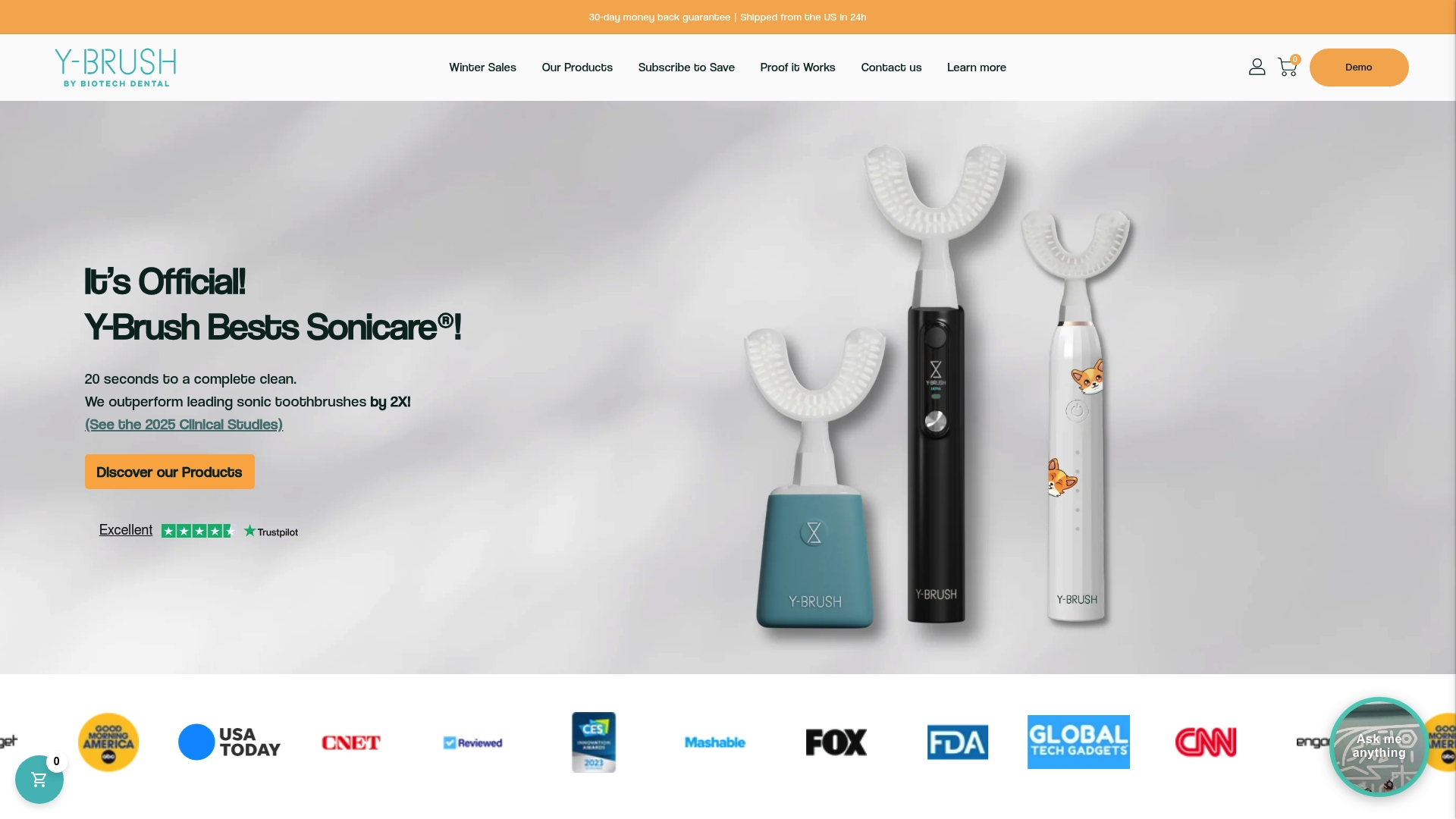
Our plans also come with a subscription-based lifetime warranty, so keeping your brush head current and keeping your coverage in place go together.
FAQ
Why do my teeth build up so much plaque?
Everyone builds plaque, because bacteria begin re-forming a film within hours of cleaning. You may build more if you snack often on sugary or starchy foods, have a dry mouth, wear braces or miss the spaces between teeth. A dentist or hygienist can tell you which factors apply to you.
Is a little bit of plaque okay?
Some plaque is always present, and dental sources describe the aim as daily disruption rather than elimination. The concern is plaque left in place. MedlinePlus says that if teeth are not cleaned well each day, plaque will lead to tooth decay or gum disease, and left long enough it hardens into tartar.
Can I scrape off tartar at home?
No. The ADA states that tartar can only be removed through cleaning by a dental professional, and scraping at it yourself risks hurting your gums and enamel. If you feel a rough deposit, schedule a cleaning, and keep brushing and flossing daily to slow new buildup.
What is the 333 rule for brushing your teeth?
It is a popular shorthand rather than an official ADA or MedlinePlus standard. The guidance dentists consistently cite is brushing at least twice a day for two minutes with fluoride toothpaste, cleaning between teeth once a day and replacing your brush or head every 3 to 4 months. Ask your dentist whether a different schedule suits you.
Why does plaque return so fast even after a professional cleaning?
A cleaning removes plaque and tartar, but the bacteria that form new plaque are still in your mouth, and saliva proteins begin coating clean teeth quickly. Daily brushing, cleaning between teeth and a visit schedule set by your dentist are what keep the buildup manageable.
Sources
- Mouth Microbes, NIH News in Health
- Dental care - adult, MedlinePlus
- Plaque and tartar on teeth, MedlinePlus
- Dental Floss/Interdental Cleaners, American Dental Association
- Home Oral Care, American Dental Association
- Gingivitis: Symptoms and causes, Mayo Clinic
- How To Remove Plaque From Teeth, Cleveland Clinic
- Dental Plaque: What It Is & Causes, Cleveland Clinic
- Floss Before or After Brushing?, Northwell Health
- Is brushing your teeth for two minutes enough?, The Conversation
- Oral Health Basics, Healthline
- Silver diamine fluoride treatment


