


Put the electric toothbrush aside for the first one to two weeks after an extraction, then bring it back once your surgeon confirms the site is closing well. Until then, brush your other teeth gently with a soft manual brush and keep clear of the socket. That pause is short, and a planned return to a faster routine is how most people recover well. We make electric toothbrushes with a Y-shaped head that cleans in 20 seconds, so we want your restart to be safe and well timed.
TL;DR
- Brush your other teeth the day after surgery. Stay away from the extraction site, and keep the electric brush off entirely at first.
- Most oral surgery practices say to wait one to two weeks before using an electric toothbrush near an extraction site. Wisdom teeth and surgical extractions usually sit at the longer end.
- After a gum graft the wait is much longer: six weeks or more, depending on your periodontist’s instructions.
- After a filling, root canal or whitening, an electric brush is generally fine within a day or two with gentle pressure.
- Your surgeon’s written instructions always come first. Ask at your follow-up visit when the electric brush can go back to the treated area.
Table of Contents
- Why the electric brush waits after an extraction
- How long to wait: a realistic timeline
- Electric toothbrush after wisdom teeth removal
- Safe brushing while the socket heals
- Electric toothbrush after a gum graft
- After fillings, root canals, whitening and scaling
- Planning your restart
- Our perspective
- Getting your brush ready for the day you are cleared
- FAQ
- Sources
Why the electric brush waits after an extraction
After a tooth comes out, a blood clot forms in the socket. That clot is the foundation of healing, and the mouth is full of bacteria, so the goal of gentle aftercare is to protect the site and preserve the clot. Topeka Oral Surgery explains it this way: careful brushing protects the surgical site and supports wound healing.
The issue with a powered brush is not that it is a bad tool. It is that vibration and rapid micro-movements are hard to control near fresh tissue. One Miami oral surgery practice notes that intense vibrations can tear dissolvable sutures and dislodge granulating tissue, and a Georgia practice lists electric brushes near the site among the things to avoid in the first 72 hours because they can contribute to dry socket.
So the rule is about timing and place. Your teeth far from the site can be cleaned normally. The area next to the socket needs a slower return.
How long to wait: a realistic timeline
Practices differ slightly, which is why your own surgeon’s sheet matters most. The ranges below come from U.S. dental and oral surgery practices and show the common pattern.
| Stage | What most practices advise |
|---|---|
| First 24 hours | Do not brush near the site. Rest and let the clot form. |
| Days 2 to 3 | Brush remaining teeth with a soft manual brush, avoiding the extraction site entirely. |
| Days 4 to 7 | Begin brushing near the site with extra caution, avoiding direct contact with the socket. |
| Days 7 to 10 | Some practices say an electric brush can return on a low-power setting without pressure on the site. |
| Weeks 2 to 4 and beyond | Gradual return to normal brushing, including the electric brush, if your surgeon agrees. |
A Texas practice puts the manual-brush period at at least five to seven days, and says that once the soft tissue has closed over the socket and the gums no longer feel tender, you can talk to your dentist about resuming the electric brush. Another surgery practice tells patients to avoid an electric brush directly over the surgical sites for about two weeks, or until healing is confirmed.
Simple versus surgical extractions
How the tooth came out changes the clock. One dental practice describes approaching the site gently around day 3 to 4 after a simple extraction, day 4 to 5 (up to 7) after a surgical one, and day 5 to 7 for a lower wisdom tooth. Those are the days to start brushing gently near the area with a manual brush, not the days to switch back to a powered one. Add your restart on top of that.

Electric toothbrush after wisdom teeth removal
Wisdom teeth are the case where the advice is most consistent. The American Association of Oral and Maxillofacial Surgeons (AAOMS) recommends gentle brushing with a manual toothbrush after wisdom teeth removal, because electric brushes can be harsh on healing gums. A Texas practice sets the pause at seven days, and also asks patients to skip hard bristles, scrubbing the site, forceful spitting and alcohol-based mouthwash.
There is a useful in-between step. After the first 24 hours, one oral surgery practice suggests that if you have an electric brush, turn it off and use the head by hand, cleaning the gum next to the surgical site in small circles. They also advise bending over and letting toothpaste fall out rather than spitting.
Lower wisdom teeth sit at the back of the jaw where a brush head is hard to angle, and healing is typically slower there. Plan for the longer end of the range and let your surgeon clear you.
Safe brushing while the socket heals
Whatever brush you hold, the technique matters as much as the tool:
- Start with the rest of the mouth. The American Dental Association’s guidance, as quoted by a dental practice, says you can brush and floss the other teeth as usual but should not clean the teeth next to the removed tooth.
- Use a soft-bristled manual brush near the site. Brush away from the socket, with light pressure and small circles.
- Rinse by tilting, not spitting. Let the water fall from your mouth.
- Skip the site until you are cleared. Direct contact with the socket is the thing to avoid.
- Call your surgeon about warning signs. Worsening pain after the first few days, a bad taste or smell, or an empty-looking socket can signal dry socket and need a visit to the dental office.
A manual brush for these two weeks is a short-term tool. The electric brush is what you come back to for the long term, so keep it clean, charged and ready.
Electric toothbrush after a gum graft
Gum grafts follow a much longer clock because the graft is held only by sutures until the body forms a seal. A Texas oral surgery practice explains that this seal is still very weak, and that trauma can cost you part or all of the graft. That is why they ask you not to brush the graft site until your doctor says so, then to use only an ultra-soft brush, moving away from the graft.
The numbers differ by office, and that is normal:
- One practice’s post-op sheet says no electric toothbrush for six weeks, and no brushing of the surgical sites until you get instructions at the post-op visit. Untreated areas can resume brushing and flossing after 24 hours.
- A periodontal practice asks patients to avoid power cleaning aids anywhere in the mouth for eight weeks after periodontal surgery.
- Another periodontal office says to wait 12 weeks before resuming an electric brush in the treated area after periodontal surgery.
One oral surgery office says simply to wait for clearance from your surgeon before using an electric brush. Treat that as the rule: your periodontist’s sheet overrides any general number, including these.
When you are cleared, a gentle technique helps. A periodontal practice recommends holding the brush still for two to three seconds per tooth without scrubbing, and letting the brush do the work.
After fillings, root canals, whitening and scaling
These procedures do not involve an open wound, so the pause is far shorter.
Fillings. An electric brush used properly does not loosen or break fillings, but you should wait until your dentist says it is safe to brush a newly treated tooth, since some materials need time to set. Use light pressure and a soft head. Ask at the appointment, since the answer depends on the material.
Root canal. The American Association of Endodontists says to brush and floss as usual but be gentle around the treated area, and avoid biting down hard on that tooth until cleared. One dentist suggests avoiding an electric brush for the first 24 hours, with most people back to their usual routine within 24 to 48 hours once tenderness eases. Another practice suggests turning the brush off and brushing the sore tooth by hand in that window.
Whitening. Brush gently with a soft-bristled brush and use any desensitizing gel from your kit. A dental practice notes that temporary sensitivity is common and usually resolves within a few days. If you had gum surgery too, whitening may need to wait: one periodontal office asks for 14 days after periodontal surgery or a graft.
Scaling and deep cleaning. Gums can be tender for a few days. Use a soft head, light pressure and the lowest setting, and follow the instructions from your hygienist or periodontist.

Planning your restart
A good restart is a short checklist, not a guess:
- Confirm the date. Ask at your follow-up when the electric brush can go back near the site, and write it down.
- Check the tissue. If the gum is no longer tender and the socket has closed over, you are in the zone where many practices begin to allow it.
- Start with the lowest intensity and use no pressure on the site.
- Keep sessions short and let the brush glide. Resting the head on each tooth is enough.
- Replace the head. If your brush head is old or was used during illness, a fresh one is a clean start for your healed mouth.
A brush that cleans in 20 seconds is a practical fit for this stage, since it keeps your restart sessions short while you are still being careful.
Our perspective
Recovery is the moment people are most likely to cut corners with brushing. It hurts, so they skip it, and a mouth that is not cleaned collects plaque exactly where the body is trying to heal.
That is why we designed Y-Brush around a complete clean in 20 seconds, using sonic vibrations and a patented Y-shaped head. Our aim is a routine you can actually keep, in recovery weeks and in normal ones. Short sessions suit the days when you are tired, sore and careful.
Our advice is the same as any good surgeon’s: follow the pause, then return to powered brushing once you are cleared. When that day comes, we want the brush to be ready, with a fresh head and a routine that fits your day.
Joris
Getting your brush ready for the day you are cleared
If you are replacing a worn brush or want a head change before your restart, you have options. Our Y-Brush plans are billed per quarter: the Core Plan is $29.90 per quarter, the Pro Plan $49.90 per quarter and the Pro+2 Plan $69.90 per quarter. Our brush heads and toothbrushes, for adults and children, are on the Y-Brush toothbrush and brush head page, and we also make compatible heads for other brands.
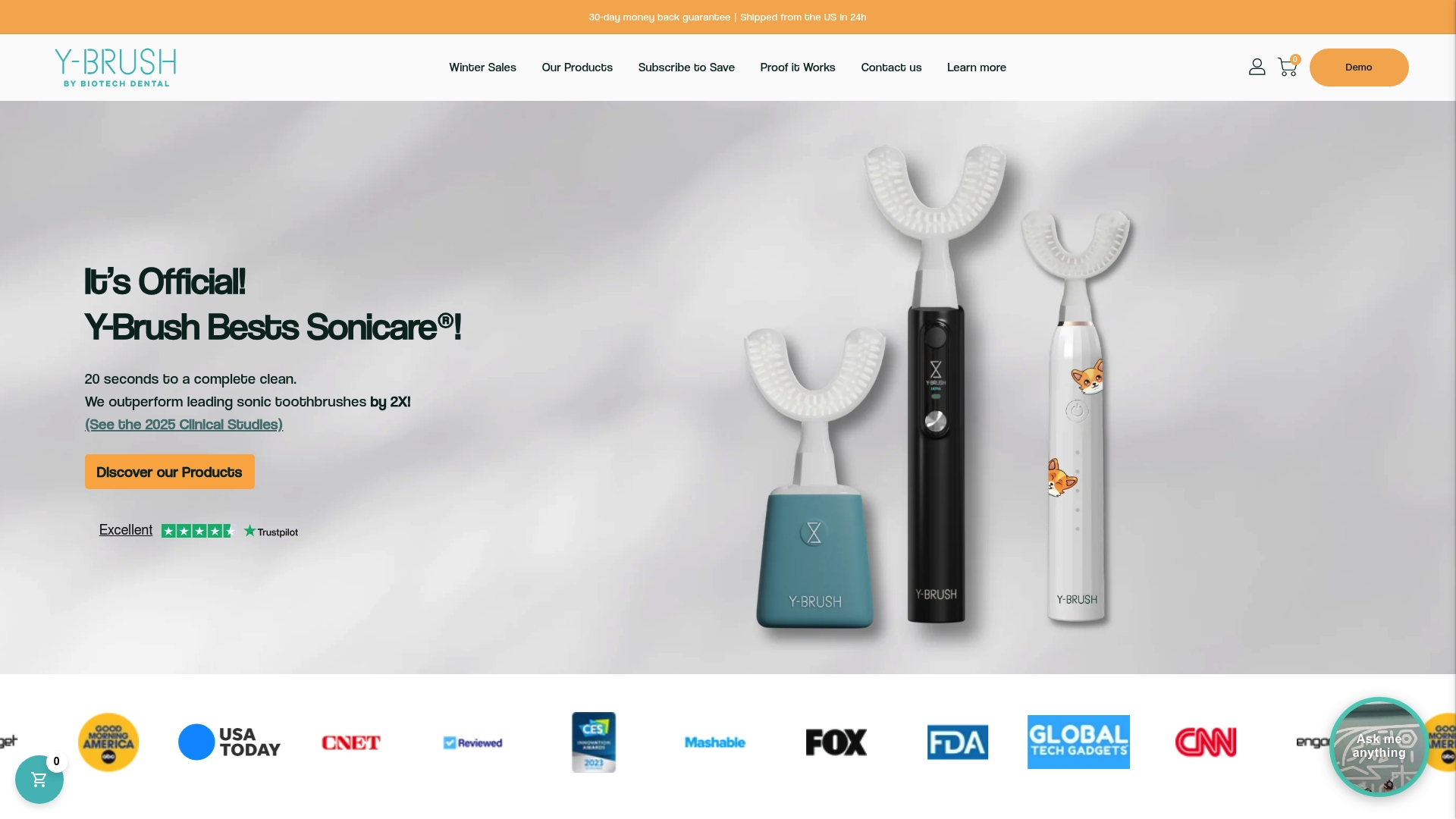
Our positioning is simple: a complete clean in 20 seconds. We back the plans with a subscription-based lifetime warranty, so a regular refill keeps your routine going after surgery and beyond.
FAQ
Can I use an electric toothbrush after wisdom teeth surgery?
Not at first. AAOMS recommends gentle manual brushing after wisdom teeth removal, and many practices set the pause at about seven days or more. Return to the electric brush only once your surgeon confirms that the sockets are healing well.
Can I use an electric toothbrush on my other teeth after an extraction?
Often yes, on teeth well away from the site. One oral surgery practice says an electric brush can be used on teeth far from the extraction area, while a manual soft brush gives more control closer in. Others prefer manual brushing throughout the first week, so follow your own sheet.
How long after a gum graft should I wait?
Longer than for an extraction. Offices give six, eight or twelve weeks for the treated area, depending on the procedure. Your periodontist will tell you when and how to brush the graft site, and that instruction replaces any general number.
Is it safe to use an electric toothbrush after a filling or root canal?
Generally yes, within a day or two, with gentle pressure and a soft head. After a root canal, avoid biting hard on the tooth until your endodontist or dentist clears you, as the AAE advises.
Sources
- Topeka Oral Surgery: safe oral care after wisdom teeth removal
- OFS Miami: when is it safe to brush normally after tooth removal
- Buford Dentist: when can I brush after a tooth extraction
- Stonelodge Dental: brushing after tooth extraction
- Your Dentista: electric toothbrush after tooth extraction
- Malden Dentistry & Implants: when can you brush after a tooth extraction
- District Dental Surgery: post-op instructions
- Camden Dental: when to brush after a tooth extraction
- AAOMS: healing after wisdom teeth removal
- Westinghouse Dental: brushing after wisdom tooth surgery
- Hill Country Oral Surgery: after gum grafting
- Valley Dental Health: gingival grafting post-op instructions
- Nygaard Poovey: post-surgical instructions
- Puget Sound Periodontics: home care toolkit
- Greater Ventura Oral & Facial Surgery: bone and tissue grafting instructions
- Tanmencias Dental: electric toothbrushes and fillings
- American Association of Endodontists: post-treatment care
- Ty King DDS: brushing after a root canal
- Lone Star Smiles: post-root-canal instructions
- Sayva Dental: teeth whitening aftercare
- Legacy Surgery: brushing after an extraction


