


You can clean a good deal of smoking-related staining and plaque at home, but not all of it. Daily brushing, cleaning between teeth and an ADA-Seal whitening toothpaste can lift surface stains and keep new buildup in check. Hardened tartar and deep, internal discoloration need a dentist or dental hygienist. This guide shows what to do at home, what to expect, and the signs that mean it is time to book a visit.
TL;DR
- Surface (extrinsic) stains from tobacco can be reduced at home with careful brushing and whitening toothpaste; tartar cannot be brushed off and needs a professional cleaning.
- Brush twice a day with fluoride toothpaste, clean between teeth once a day, and brush your tongue.
- Smoking doubles the risk of gum disease, so bleeding gums, bad breath or brown and gray discoloration deserve a dental exam, not more scrubbing.
- Look for the ADA Seal on whitening products, and get cavities and gum problems treated before you whiten.
- Quitting is the only way to stop new smoking stains from forming.
Table of Contents
- Why smoking stains teeth and harms gums
- What you can clean at home and what you can’t
- A daily routine for cleaning smoker’s teeth at home
- Whitening toothpaste and at-home kits: what to expect
- Perspective: why a 20-second habit can matter for smokers
- Where an electric toothbrush fits in
- A realistic timeline and what results to expect
- When to see a dentist instead of cleaning more
- Quitting is the part cleaning cannot replace
- FAQ
- Sources
Why smoking stains teeth and harms gums
Nicotine and tar in tobacco smoke stain teeth, and quitting stops that staining from developing. The tar clings to enamel, and the rough, porous surface of teeth holds on to pigment a little more with each cigarette. Over months and years, a yellow tint turns amber or brown, especially along the gumline and on the backs of the front teeth, where brushing tends to be less thorough.
Staining is only the visible part. The American Dental Association lists tooth staining, periodontal disease, impaired healing after periodontal treatment, gum recession, oral cancer and mucosal lesions among the effects of cigarette smoking. The CDC reports that smoking doubles the risk of gum disease compared with not smoking, and that the risk rises with both the number of cigarettes and the years of smoking. The FDA adds that smoking can contribute to tooth decay, periodontitis, pain and tooth loss.
That is why a smoker’s home routine has two jobs: lift the surface stain you can see, and keep plaque under control so the gums underneath stay as healthy as possible.
What you can clean at home and what you can’t
Three things get lumped together as “smoker’s teeth”: surface stain, plaque and tartar. They respond to very different treatment.
| Problem | What it looks like | Can you fix it at home? |
|---|---|---|
| Surface (extrinsic) stain | Yellow or light brown film, often at the gumline | Yes, in many cases. The ADA says a wide range of extrinsic stains can be reduced with whitening toothpaste or a professional cleaning. |
| Plaque | Soft, sticky, pale film that returns daily | Yes. Thorough brushing and cleaning between teeth remove it. |
| Tartar (calculus) | Hard, rough, yellow-to-dark crust, often near the gums | No. NIDCR says tartar cannot be removed by brushing or flossing; only a dentist or hygienist can remove it. |
| Deep (intrinsic) stain | Brown or gray color within the tooth | Not with toothpaste. Over-the-counter toothpastes and gums primarily remove surface stains and do not significantly affect intrinsic ones. |
The practical takeaway: if your stain is a dull film, home care can make a visible difference. If it is a hard, dark crust that your toothbrush slides over, you are almost certainly looking at tartar, and the fastest fix is a professional cleaning. Home care then keeps the results.
A daily routine for cleaning smoker’s teeth at home
None of this is exotic. The gains come from doing the basics thoroughly and every day.
1. Brush twice a day with fluoride toothpaste
NIDCR recommends brushing twice daily with fluoride toothpaste, brushing gently at the gumline and on every tooth surface, and brushing your tongue. Smokers often under-brush the inner surfaces of the front teeth and the area right along the gums, which is where stain and plaque collect. Slow down there. Angle the bristles toward the gumline and use small, light strokes rather than hard scrubbing, which does not remove more stain and can irritate gums.
2. Clean between your teeth once a day
NIDCR recommends cleaning between teeth regularly, aiming for once daily, with floss, an interdental brush, a water flosser or another tool a dental professional recommends. The CDC likewise includes flossing between teeth in its adult guidance. Since smokers are at higher risk of gum disease, this step matters as much as the brushing, because a toothbrush cannot reach the sides of teeth where plaque builds.

3. Brush your tongue
Tobacco leaves residue on the tongue as well. A gentle tongue brushing at the end of your routine is part of the NIDCR advice and helps with the stale taste and breath many smokers notice.
4. After a cigarette, rinse rather than scrub
A common tip is to brush right after smoking. A sensible, low-risk version is to rinse your mouth with water after a cigarette and save the thorough brushing for your regular morning and evening routine. Rinsing washes away loose residue and keeps your mouth moist, and it pairs well with drinking water through the day. If you use mouthwash, an alcohol-free one is gentler on a mouth that tobacco has already dried out.
5. Use fluoridated water and keep your dental visits
The CDC advises adults to drink fluoridated tap water, brush with fluoride toothpaste, floss, avoid tobacco and see a dentist at least once a year. For smokers, once a year is the floor, not the target. Ask your dentist how often you should come in based on your gums.
Whitening toothpaste and at-home kits: what to expect
Whitening products are where most smokers look next, and the evidence is reasonably clear about what they do.
The ADA states that whitening toothpastes and strips carrying its Seal meet its requirements for safety and effectiveness when used as directed. Whitening toothpastes mainly work on extrinsic stains, so they suit the surface film tobacco leaves behind. They will not change the underlying shade of the tooth the way a bleaching treatment can.
Know the trade-offs before you start:
- Sensitivity and gum irritation. The ADA notes that whitening can cause temporary tooth sensitivity and gingival irritation. If your gums are already inflamed, that can feel worse.
- Talk to a dentist first. The ADA recommends consulting a licensed dentist to decide whether whitening is appropriate for you.
- Fix problems before whitening. Cleveland Clinic’s Dr. Clemons advises getting your teeth healthy first, meaning gum disease and cavities are treated before you bleach anything.
- Safety of bleaching. Some laboratory studies suggest aggressive bleaching may cause erosion or changes in tooth microstructure, but those studies were not done on living teeth, and the Cleveland Clinic reports it has not seen an increase in cavities or tooth fractures after whitening.
For a smoker, a realistic plan is an ADA-Seal whitening toothpaste for daily use, a professional cleaning to clear tartar and heavy stain, and a conversation with your dentist about whether stronger whitening makes sense afterward.
What about baking soda, charcoal and other home remedies?
Many pages ranking for this topic suggest pastes made from baking soda and hydrogen peroxide, or activated charcoal. Any gritty paste works by abrasion, and abrasion that is too aggressive on enamel or gums is a trade you may regret. We would not rely on homemade mixtures. If you want something stronger than your regular toothpaste, choose a product with the ADA Seal and ask your dentist, who can look at your actual enamel and gums, what suits you.
Perspective: why a 20-second habit can matter for smokers
We built Y-Brush around one uncomfortable fact: people know they should brush for two full minutes, yet most do not, and a typical brushing session is under one minute. For smokers, the shortfall has consequences, because plaque left on teeth and along the gumline is exactly what feeds the gum problems smoking already makes more likely.

So our view is simple. The best cleaning routine is the one that actually happens twice a day. Our patented Y-shaped brush head is designed to clean the front, back and chewing surfaces of the teeth at the same time using sonic vibrations, and we claim a complete clean in 20 seconds. That is a design for real life, for the morning that runs late and the evening you are tired.
We are also clear about limits. A toothbrush, ours included, removes plaque; it does not remove tartar, and it does not undo what tobacco does to your gums. No brush replaces a dental cleaning, a floss or interdental habit, or quitting. What we can do is make the daily basics faster and more consistent, so the professional care you receive goes further.
— Joris
Where an electric toothbrush fits in
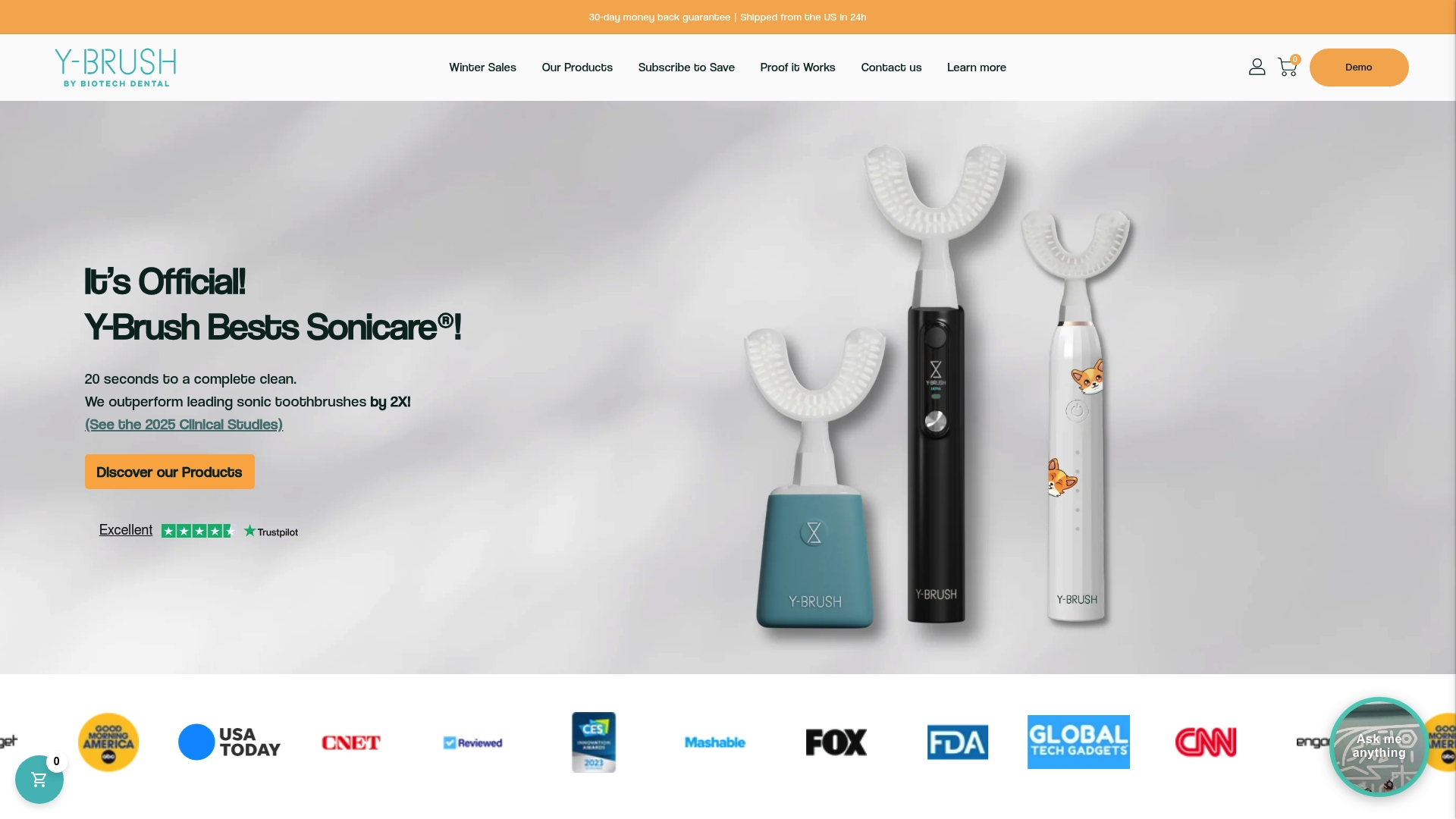
If you smoke and your current brushing is rushed, an electric toothbrush is one of the simplest upgrades. Y-Brush electric toothbrushes use a patented Y-shaped head and sonic vibrations, and we say they deliver a complete clean in 20 seconds. Our positioning is that the design is clinically proven to remove plaque 2X more effectively than leading sonic toothbrushes, and it is backed by a subscription-based lifetime warranty.
The plans are quarterly, so fresh brush heads arrive on a regular schedule:
| Plan | Price |
|---|---|
| Core Plan | $29.90 per quarter |
| Pro Plan | $49.90 per quarter |
| Pro+2 Plan | $69.90 per quarter |
You can compare the Core, Pro and Pro+2 plans side by side, or browse Y-Brush toothbrushes and replacement brush heads if you only need heads. Brush heads wear out, and a worn head cleans less well, so a refill schedule helps a daily routine stay effective.
Pair the brush with the rest of the routine: fluoride toothpaste, interdental cleaning once a day, and a dentist you see regularly. The brush covers the plaque you can reach; the rest of the routine covers what it can’t.
A realistic timeline and what results to expect
Set expectations honestly, because that keeps you from overscrubbing.
- First week. Your mouth feels cleaner and your breath and the film on your teeth improve as plaque is removed more consistently. Gums that bled from neglect may bleed less once you clean them daily. If bleeding continues, mention it to a dentist.
- First few weeks. A whitening toothpaste can start to lighten surface stain. Results vary with how long and how heavily you have smoked, and how deep the stain sits.
- After a professional cleaning. This is the biggest single jump, because a hygienist can remove tartar and heavy stain in one visit. The ADA notes that professional cleaning, like whitening toothpaste, is an effective way to reduce extrinsic stains. Home care then keeps the result.
- Ongoing. As long as you smoke, new stain keeps forming. Home care slows it and keeps it manageable, but it cannot stop it.
When to see a dentist instead of cleaning more
Some signs mean more scrubbing is the wrong response. Cleveland Clinic advises that if tooth discoloration comes with pain, bad breath, bleeding gums or holes in your teeth, you should schedule a dentist appointment right away. It also notes that brown or gray discoloration may point to deeper problems that bleaching will not resolve, which is why an assessment before whitening matters.
Book a visit if you notice any of these:
- Dark spots or black areas that do not brush off, which may be tartar or decay
- Gums that bleed, swell, look red or pull back from the teeth
- Persistent bad breath that does not improve with daily cleaning
- Loose teeth or pain when chewing
- A sore, patch or lesion in your mouth that does not heal
The CDC notes that regular dental cleanings plus daily brushing and flossing can help treat early gum disease, while advanced disease may require deep cleaning below the gumline, prescription treatment or surgery. Catching it early is far easier than treating it late.
Quitting is the part cleaning cannot replace
The ADA’s guidance makes the limit of home care plain: smoking directly contributes to staining and to periodontal damage, and it can make healing after treatment less effective. You can clean well and still lose ground if you keep smoking.
The FDA says quitting tobacco can stop further damage to oral health, and it recommends talking with a health-care provider about FDA-approved nicotine replacement therapy or other cessation options. If you are thinking about quitting, tell your dentist as well. They see the effects first and can support you and time your cleanings and whitening around it.
FAQ
How do you clean your teeth after smoking?
Rinse with water right after a cigarette to wash away loose residue and keep your mouth moist. Then stick to brushing twice a day with fluoride toothpaste, cleaning between your teeth once daily and brushing your tongue, as NIDCR recommends. Regular dental cleanings handle what home care cannot.
Can tar stains be removed from teeth at home?
Surface tobacco stains can often be reduced with careful brushing and an ADA-Seal whitening toothpaste. Hardened tartar cannot be removed by brushing or flossing, so a dentist or hygienist needs to scale it off. If the stain is deep inside the tooth, whitening toothpaste will not do much either.
What removes black stains from teeth?
Black or very dark spots can be heavy stain, tartar or decay, and you cannot tell which by looking. A dentist can examine them and remove stain and tartar with a professional cleaning, or treat a cavity if that is the cause. See someone promptly if the spots come with pain, bleeding gums or holes in the teeth.
Is whitening toothpaste safe for smokers?
Products with the ADA Seal meet the ADA’s requirements for safety and effectiveness when used as directed. Temporary sensitivity and gum irritation are possible, and smokers are more prone to gum problems, so ask your dentist whether whitening suits you. Treat gum disease and cavities first.
Will an electric toothbrush help with smoker’s teeth?
An electric toothbrush can make thorough daily plaque removal easier and more consistent, which supports gum health. It will not remove tartar or deep stain, and it does not stop new staining while you smoke. Think of it as one part of a routine that also includes cleaning between teeth and professional dental care.
Sources
- Whitening | American Dental Association
- Tobacco Use and Cessation | American Dental Association
- Oral Hygiene | National Institute of Dental and Craniofacial Research
- Smoking, Gum Disease, and Tooth Loss | CDC
- Oral Health Tips for Adults | CDC
- How Tobacco Use Affects Oral Health | FDA
- Tooth Discoloration: Causes & Treatment | Cleveland Clinic
- Is Teeth Whitening Safe (and Does It Work)? | Cleveland Clinic
- Smoking | teeth.org.au


