


Morning breath is normal, and brushing usually improves it fast. When it hangs on after you brush, the cause is usually something brushing alone doesn’t reach: bacteria on the back of the tongue, food between teeth, a dry mouth, or inflamed gums. Most of these can be fixed with small changes to your night routine. A few signal that it’s time to see a dentist.
This guide explains why your mouth smells worse after sleep, why a brushing session sometimes doesn’t fix it, and what to do tonight and tomorrow morning. It also covers the signs that point to something more than ordinary morning breath.
TL;DR
- Morning breath comes from a drier mouth overnight, which lets odor-producing bacteria multiply. It is a normal result of sleep.
- If brushing doesn’t clear it, look at the tongue, the spaces between your teeth, dry mouth, and your gums.
- The biggest gains come from the evening: brush, floss, clean your tongue, and drink water before bed.
- Bad breath that won’t go away despite good habits is worth a dental visit, because gum disease is a common cause.
- A thorough, consistent brushing habit is the foundation of all of this, and a 20-second clean can help you keep it up.
Table of Contents
- Why your breath smells in the morning
- Why breath can still smell bad after you brush
- Quick guide: what your clue points to
- Morning breath or halitosis?
- A night routine that works
- A morning routine that keeps it away
- Longer-term habits that help
- Perspective: why a short, consistent clean beats a long one you skip
- When to see a dentist or doctor
- Making the nightly clean easier to keep
- FAQ
- Sources
Why your breath smells in the morning
While you sleep, saliva flow drops. Saliva normally rinses the mouth and keeps bacteria in check, so less of it means odor-causing bacteria can multiply. Harvard Health explains that breathing through the mouth during sleep dries out saliva and lets bacteria produce chemicals that smell bad. Any medicine or condition that reduces saliva can do the same.
The smell itself comes from what the bacteria do with leftover food. Cleveland Clinic notes that as bacteria break down food particles, they release smelly, sometimes sulfur-like compounds that linger in your mouth. Mayo Clinic adds that dry mouth during sleep naturally leads to morning breath and gets worse if you sleep with your mouth open.
So morning breath is not a sign that you did something wrong. It is the expected result of hours without saliva flow, without swallowing, and without any cleaning.
Why breath can still smell bad after you brush
Brushing removes plaque and food from tooth surfaces. Odor, however, doesn’t only come from tooth surfaces. The Merck Manual describes halitosis as most often resulting from food particles being broken down by anaerobic bacteria, which produce volatile sulfur compounds such as hydrogen sulfide and methyl mercaptan. Those bacteria live in places a toothbrush passes over quickly or misses entirely.
The tongue and the back of the throat
Live Science reports that sulfur-producing bacteria thrive on the surface of the tongue and at the back of the throat, where they release volatile sulfur compounds. If you brush your teeth thoroughly but leave the tongue alone, a major odor source stays in place. Cleaning the tongue once a day, ideally before bed, is one of the most useful additions to a routine.

Food trapped between teeth
The same Live Science article quotes an oral and maxillofacial surgeon who calls skipping floss one of the simplest and most overlooked reasons for bad breath after brushing. Food trapped between teeth slowly decomposes over days. A brush bristle can’t reliably get into that space, so the smell returns no matter how long you brush.
A dry mouth that isn’t just from sleep
Some people have a dry mouth all day, and it gets worse overnight. A review in PMC states that medication is the most common cause of reduced saliva. The drug classes it lists include antihistamines, antidepressants, antihypertensives and diuretics. Chronic mouth breathing and dehydration can also reduce salivation. The same review explains that when saliva drops, it hampers the mouth’s self-cleaning and favors bacterial breakdown of food debris, which increases odor compounds.
Caffeine plays a small part too. Live Science reports that coffee can lower saliva production for about two hours after you drink it, which can add to dry mouth and bad breath.
Gum inflammation
Plaque that sits along the gumline can inflame the gums. The American Dental Association’s MouthHealthy page says bad breath that just won’t go away, or a constant bad taste, can be a warning sign of advanced gum disease. Gum disease is a dentist’s job to assess, so this is the cause not to guess at.
Foods, tobacco and other causes
Foods with strong volatile compounds, such as onions and garlic, can affect breath for hours. Johns Hopkins Medicine lists certain foods absorbed into the bloodstream, tobacco products, poorly cleaned dentures and gum disease among the causes. It also lists medical conditions such as respiratory infection, chronic sinusitis, postnasal drip, diabetes, and liver or kidney disorders.
Quick guide: what your clue points to
| What you notice | Likely cause | What to try |
|---|---|---|
| White or yellow coating on the tongue, smell fades slowly | Bacteria on the tongue | Clean the tongue once a day, especially at night |
| Smell returns within hours of brushing, food catches between teeth | Trapped food | Floss daily, before you brush |
| Sticky, dry feeling, thick saliva, waking with a dry mouth | Dry mouth or mouth breathing | Drink water, ask your doctor or pharmacist about medicines, consider a humidifier |
| Bleeding gums, bad taste that doesn’t leave | Gum inflammation | Book a dental exam |
| Smell worse after coffee, garlic or onions | Foods and caffeine | Rinse with water, brush and floss after meals |
| Congestion, postnasal drip, sore throat | Sinus or throat issue | See your doctor if it persists |
Morning breath or halitosis?
The two are not the same. The UK’s NICE clinical knowledge summary defines halitosis as an unpleasant or offensive odor in exhaled air. It separates physiological halitosis, which is usually transient and normal, such as after a night’s sleep or fasting, from pathological halitosis, which originates from intra-oral or extra-oral disease.
A practical test: ordinary morning breath fades after you brush, floss, clean your tongue and have some water, and it stays away for a good part of the day. If the odor returns quickly, is there all day, or comes with other symptoms, treat it as a signal to look closer.
A night routine that works
What you do before bed matters more than what you do after waking, because it decides how much food and plaque the bacteria have to work with overnight.
- Floss first. Clearing the spaces between teeth removes the food that would otherwise decompose overnight.
- Brush for a full, thorough clean. Use fluoride toothpaste. Mayo Clinic’s treatment guidance recommends brushing at least twice daily, flossing daily and brushing the tongue.
- Clean your tongue. Cleveland Clinic suggests scraping the tongue before bed.
- Rinse with an alcohol-free mouthwash. Cleveland Clinic lists it among its quick fixes for morning breath.
- Clean dental appliances. Mayo Clinic includes cleaning dentures and other appliances in its advice.
- Drink some water. It helps keep the mouth moist before sleep.
A morning routine that keeps it away
- Drink water first thing. Cleveland Clinic recommends it, since it helps restore moisture after a dry night.
- Brush again. The film of bacteria that built up overnight is easier to remove before breakfast.
- Use sugarless gum or candy through the day. Mayo Clinic suggests it to keep the mouth moist.
- Go easy on coffee on an empty stomach. Because caffeine lowers saliva for a couple of hours, drinking water alongside it helps.
Longer-term habits that help
- Limit or avoid tobacco. Cleveland Clinic lists this among long-term strategies, and smoking appears among the most common causes of halitosis in the Merck Manual.
- Manage sinus issues and acid reflux with your doctor.
- Try a humidifier in the bedroom if the air is dry.
- Replace a frayed brush or brush head every 3 to 4 months. This is Mayo Clinic’s guidance.
- See your dentist regularly, generally twice a year, according to Mayo Clinic.
- Warm salt water rinses. A dentist quoted by Live Science says they cleanse the area, reduce inflammation and make it harder for harmful bacteria to grow. This is a supporting habit, not a substitute for brushing and flossing.
Perspective: why a short, consistent clean beats a long one you skip
We built Y-Brush around one observation: most people know they should brush for two full minutes, and about 90% don’t. A typical brushing session lasts under a minute. If you wake up with bad breath despite brushing, that gap is worth looking at first.
A routine only works if you actually do it, especially at night, when it matters most for morning breath. That is why we designed a toothbrush with a patented Y-shaped head that cleans the front, back and chewing surfaces together, using sonic vibrations to deliver a complete clean in 20 seconds. Our clinical claim is that it removes plaque 2X more effectively than leading sonic toothbrushes. For a person who rushes or skips the evening brush, a faster, more thorough clean is a practical way to keep the habit.
Plaque is where oral bacteria live, and plaque removal is the foundation of fresh breath. Brushing doesn’t replace flossing, tongue cleaning or dental visits, and we would never suggest otherwise. It makes the base layer of your routine easier to do well, every night.
Worn bristles also clean less well, which is why we offer replacement heads and membership plans with regular refills. A quarterly refill fits the 3 to 4 month replacement window that dental guidance recommends.
Joris
When to see a dentist or doctor
Home changes should show results within a couple of weeks. If they don’t, don’t keep guessing. Mayo Clinic advises seeing your dentist if you still have bad breath after making lifestyle changes. The dentist may refer you to another professional if a more serious condition seems to be behind it.
Book a visit sooner if you notice any of the following:
- Bad breath that doesn’t go away, or a constant bad taste. The ADA links this with possible advanced gum disease. Mayo Clinic’s periodontitis page lists bad breath that won’t go away among the symptoms and recommends an appointment as soon as possible, because earlier care gives better chances of reversing damage.
- Breath odor with fever, cough, or face pain with nasal discharge. MedlinePlus advises contacting your provider for these signs of a respiratory infection.
- Persistent dry mouth, especially if you take medication that could cause it. Ask your doctor or pharmacist before changing anything.
At the exam, Johns Hopkins Medicine says dentists usually diagnose bad breath from your health history and the mouth odor, and they check the whole mouth for causes such as infection. If they find nothing, they refer you to your primary care provider. Mayo Clinic notes that dentists generally prefer morning appointments for this, because food eaten during the day is less likely to skew the exam. It also suggests skipping perfume, scented lotions and scented lipstick that day, because they can mask odors.
Making the nightly clean easier to keep

The habits above only help if you do them. If you find yourself cutting the evening brush short, a toothbrush that completes a clean in 20 seconds can make the routine easier to stick with.
Y-Brush electric toothbrushes use a patented Y-shaped head and sonic vibrations, and the plans include regular brush head refills. Plans are billed quarterly: the Core Plan is $29.90 per quarter, the Pro Plan is $49.90 per quarter and the Pro+2 Plan is $69.90 per quarter. You can compare them on our toothbrush plans page. If you only need a fresh head, browse our brush heads and toothbrushes, which include heads compatible with other brands.
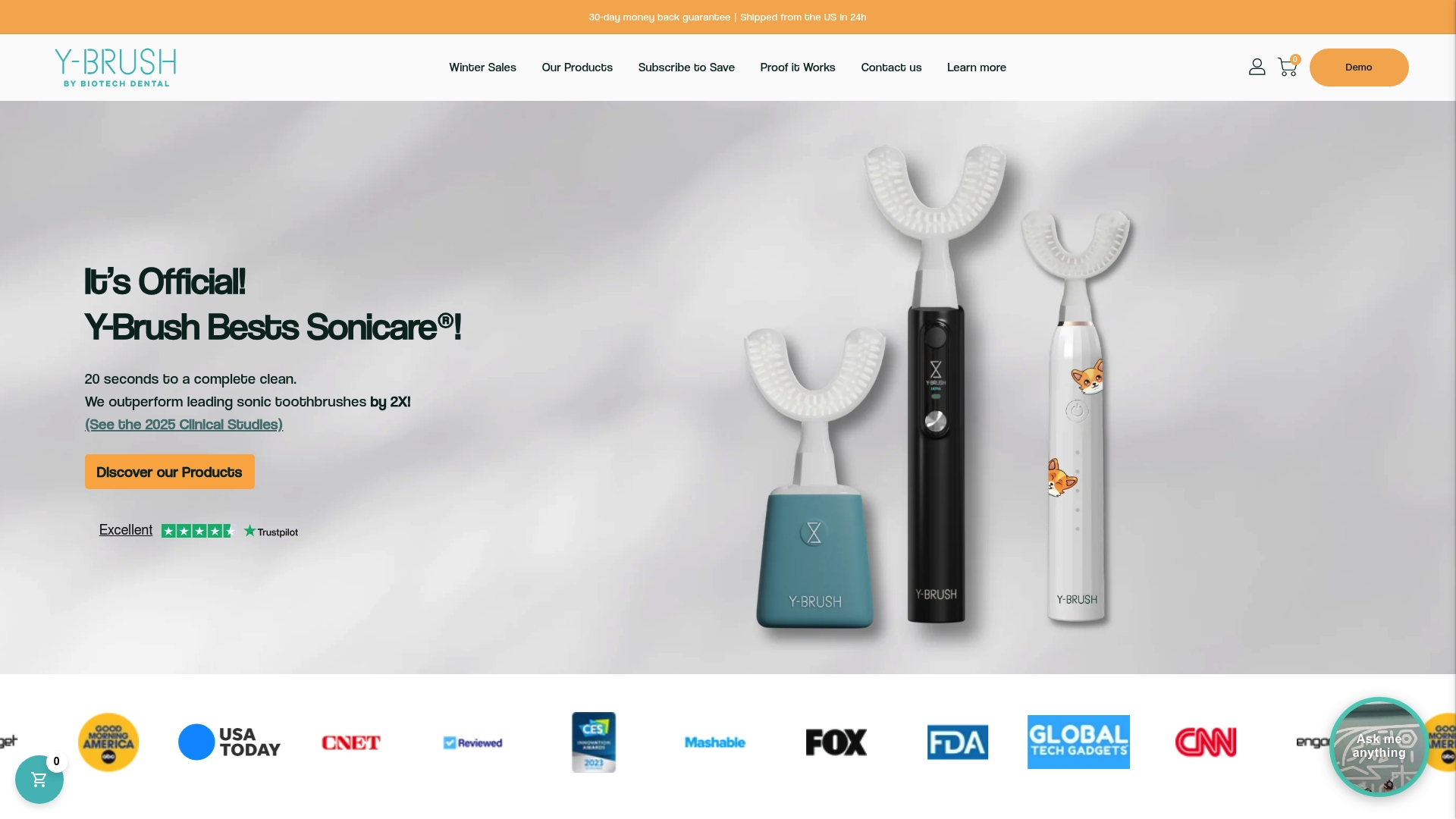
Pair a toothbrush with floss, a tongue cleaner and regular dental visits, and you have the full routine this guide describes.
FAQ
Why does my breath smell in the morning even though I brushed the night before?
Brushing doesn’t stop bacteria from multiplying while saliva flow drops during sleep. Odor compounds build up overnight regardless. Flossing, cleaning your tongue and drinking water before bed reduce what the bacteria have to work with, and sleeping with your mouth open or a dry bedroom can make it worse.
Why is my breath still bad after I brush my teeth?
The most common reasons are bacteria on the tongue, food left between teeth, dry mouth and gum inflammation. Start with flossing and tongue cleaning. If the smell persists after a couple of weeks of good habits, see your dentist to check your gums and teeth.
Is morning breath a sign of a health problem?
Usually not. Clinical sources describe the odor after a night’s sleep as normal and temporary. It becomes worth checking when the odor lasts through the day, returns soon after brushing, or comes with symptoms like bleeding gums, a constant bad taste, fever or cough.
Does mouthwash fix morning breath?
It can help as one step, not the whole routine. Cleveland Clinic suggests an alcohol-free mouthwash among quick fixes, alongside brushing, flossing, drinking water and cleaning the tongue. Rinsing doesn’t remove food from between teeth or bacteria from the tongue as effectively as mechanical cleaning.
How often should I replace my toothbrush head?
Mayo Clinic recommends replacing a frayed toothbrush every 3 to 4 months. Worn bristles can’t clean as well, so a fresh head keeps your routine effective.
Sources
- Bad morning breath, Harvard Health
- Morning Breath: Causes and Fixes, Cleveland Clinic
- Bad breath: Symptoms and causes, Mayo Clinic
- Bad breath: Diagnosis and treatment, Mayo Clinic
- Periodontitis: Symptoms and causes, Mayo Clinic
- Why does your breath sometimes stink even after brushing, Live Science
- Halitosis (Bad Breath), Johns Hopkins Medicine
- Revisiting Standard and Novel Therapeutic Approaches, PMC
- Bad Breath, MouthHealthy (American Dental Association)
- Halitosis, Merck Manual Professional Edition
- Halitosis definition, NICE CKS
- Breath odor, MedlinePlus


