


One missed brushing is not a crisis, but a pattern of them is how plaque turns into tartar and irritated gums. If you forgot tonight, brush as soon as you remember (and wait an hour if you just had something acidic). To stop forgetting, tie brushing to something you already do every day and let a timer carry the rest.
This guide covers how common the problem is, what really happens in your mouth when brushing slips, what to do right after a lapse, and how to build a routine that holds on busy days.
TL;DR
- Forgetting is common: one survey of US adults found about five missed brushings a week.
- A single skipped session leaves plaque in place. Repeated skips let it harden into tartar, which only a dental cleaning can remove.
- If you forgot, brush when you remember, aim for at least two minutes, and go longer rather than harder.
- The ADA routine is two minutes, twice a day, with fluoride toothpaste, plus cleaning between teeth daily.
- Habit stacking, a visible brush and a built-in timer make remembering far easier.
Table of Contents
- How common is it to forget to brush?
- What happens when you forget to brush
- What to do if you forgot to brush
- How to remember to brush your teeth
- What the standard brushing routine is
- Make brushing easier with Y-Brush
- When to see a dentist
- FAQ
- Sources
How common is it to forget to brush?
More common than most people admit. A survey of 2,000 Americans, reported by Dentistry IQ, found US adults forget to brush about five times a week, with similar lapses in flossing.
Routine disruption plays a big part. A poll reported by Ipsos found more than half of Americans said holidays or big events led them to skip or scale back oral care, including skipping brushing at least once a day.
The pattern is familiar: a late night, a red-eye flight, a newborn, a hectic morning with kids. Nobody forgets because they don’t care. They forget because brushing sits at the edge of a day that is already full. That is useful to know, because it means the fix is rarely willpower. It is design: where the brush lives, what cues it and how long it takes.
What happens when you forget to brush
Plaque is the sticky film of bacteria that forms on teeth all day. According to Mayo Clinic, after you eat sugary food, plaque bacteria produce acids that break down enamel and can lead to cavities. Plaque that stays can harden into tartar, which is harder to clean, and tartar on the gums leads to inflammation that causes gum disease.
One missed night
A single skipped brushing is not likely to cause lasting damage on its own, but it gives plaque more time to work. Healthline, citing a dental pathology textbook, says plaque can begin to decalcify dentin within about 48 hours after a day without brushing. Read that as a window: if you get back to proper brushing quickly, you remove plaque before it does that kind of harm.
Several days without brushing
The longer the gap, the more plaque accumulates. Healthline notes that after about a week without brushing, excess plaque can contribute to bad breath. Plaque that stays too long can harden into tartar, and the National Institute of Dental and Craniofacial Research (NIDCR) states that the only way to remove tartar is a dental cleaning.
When it becomes a habit
Regular lapses are where gum health is at stake. The ADA’s MouthHealthy site explains that when tartar collects above the gum line, gum tissue can become swollen and bleed easily, which is gingivitis. NIDCR describes gingivitis as swollen, red and bleeding gums, and says that when it comes from plaque buildup it is a mild form of gum disease that can usually be reversed with daily brushing and flossing.
If tartar is not removed, NIDCR adds, gingivitis can worsen into more severe periodontal disease, which in advanced stages can include tooth loss. The encouraging part is how reversible the early stage is: consistent daily care is the lever.
| How long | What can build up | What helps |
|---|---|---|
| One missed brushing | Plaque stays on teeth a few extra hours | Brush when you remember, then return to your routine |
| About 48 hours | Plaque can start to affect dentin, per Healthline | Resume thorough brushing and cleaning between teeth right away |
| About a week | Excess plaque, bad breath, irritated gums | Restart twice-daily brushing and book a checkup if gums bleed |
| Ongoing pattern | Tartar, gingivitis, risk of periodontal disease | Daily care plus a professional cleaning to remove tartar |
What to do if you forgot to brush
The goal is simple: get plaque off as soon as you reasonably can, without overcorrecting.
- Brush when you remember. Late is better than never, even if it is the middle of the night. Plaque left overnight has the longest uninterrupted time to act.
- Wait an hour after acidic foods or drinks. Mayo Clinic recommends waiting about an hour to brush after eating or drinking things high in acid, such as soda, sour candies or citrus juice and fruit, because brushing too soon can take enamel off.
- Go longer, not harder. A dentist quoted by Well+Good advises against brushing too hard to make up for missed sessions. Brush longer instead. The same article suggests a make-up session of at least two minutes, possibly more, using the ADA’s guidance of a soft-bristled brush.
- Clean between your teeth. The American Dental Association recommends cleaning between teeth daily in addition to brushing twice a day. After a lapse, that step matters even more.
- Return to the normal schedule the next day. Don’t double up in an anxious burst. Two thorough, two-minute sessions a day is the target.
If you are away from home without your toothbrush
The ADA’s MouthHealthy travel tips say you can rinse vigorously with water, and in a pinch apply toothpaste to a clean washcloth or your finger. When you can, pick up a soft toothbrush with the ADA Seal of Acceptance.
How to remember to brush your teeth
Most people who forget already know they should brush. What they lack is a cue. These approaches are the ones supported by dental guidance and habit research.
Stack brushing onto something you already do
Habit stacking means attaching a new behavior to something you do automatically. An AP News piece on habit stacking describes it as a way to build new habits, and notes that electric toothbrush timers can cue you when to switch quadrants. Good anchors:
- Morning: after you start the coffee, or right after you turn off your alarm.
- Night: after you plug in your phone, or after you set out tomorrow’s clothes.
- Kids’ routine: after bath time or after the last book.
The anchor matters more than the time of day. “After I plug in my phone” works on a night you get home at 1 a.m. “At 10 p.m.” does not.
Keep your brush where you can see it
NIDCR’s caregiver guidance suggests leaving the toothbrush and toothpaste on the sink and brushing at the same time and place each day. Visual cues are cheap reminders. If your brush lives in a drawer or a travel bag, you will forget more often.
Use a timer so the session is short and defined
The ADA says egg or hourglass timers, music videos and smartphone apps can help you reach two minutes, and that some manual and many powered toothbrushes have built-in timers. It also breaks two minutes down as roughly 30 seconds per quadrant, or about four seconds per tooth. A defined, finite task is easier to start than a vague one.

Make the evening session the priority
Many people brush reliably in the morning and skip at night when they are tired. Putting your toothbrush in the same spot as your bedtime essentials, such as your phone charger or glasses case, gives the night session its own cue.
Plan for disruptions
Given that holidays and big events trigger skipped brushing, build a fallback. Keep a spare brush and small toothpaste in your bag or car, and set a recurring phone reminder during travel weeks. The goal is not perfection but a short route back to the routine.
What the standard brushing routine is

You may see catchy rules online, but the guidance from US dental bodies is simple. The ADA says to brush twice a day with fluoride toothpaste for two minutes each time, and to clean between teeth daily. Its toothbrush guidance recommends soft bristles and replacing your brush every three to four months, or sooner if the bristles are matted or frayed.
That last point is easy to forget too, and it is another reminder problem a routine can solve.
Our perspective: make the habit fit the day
We built Y-Brush around one observation: people know they should brush for two full minutes, yet most don’t, and a typical brush lasts under a minute. Telling people to try harder hasn’t solved that. Designing a tool that fits real life seems a better answer.
That is why our patented Y-shaped brush head is designed to deliver a complete clean in 20 seconds using sonic vibrations. We say it is clinically proven to remove plaque 2X more effectively than leading sonic toothbrushes, and we describe the clean as dentist-approved. When brushing takes 20 seconds, it is far easier to start on a night when you are exhausted, and far easier to fit into a morning that has already gone sideways.
Our view is that forgetting is rarely about caring. It is about friction. Reduce the time, keep the brush visible, anchor it to something you already do, and brushing becomes the thing you do without deciding to. A quick, confident clean also means that when you do slip, getting back on track costs you very little.
We also stand behind the product with a subscription-based lifetime warranty, and our plans bring fresh heads to your door on schedule, so replacing worn bristles is one less thing to remember.
Joris
Make brushing easier with Y-Brush
If you want a routine that survives late nights, travel and school mornings, a faster brush is one practical piece of it. Y-Brush electric toothbrushes use a patented Y-shaped head and sonic vibrations to deliver a complete clean in 20 seconds, for adults and for children.
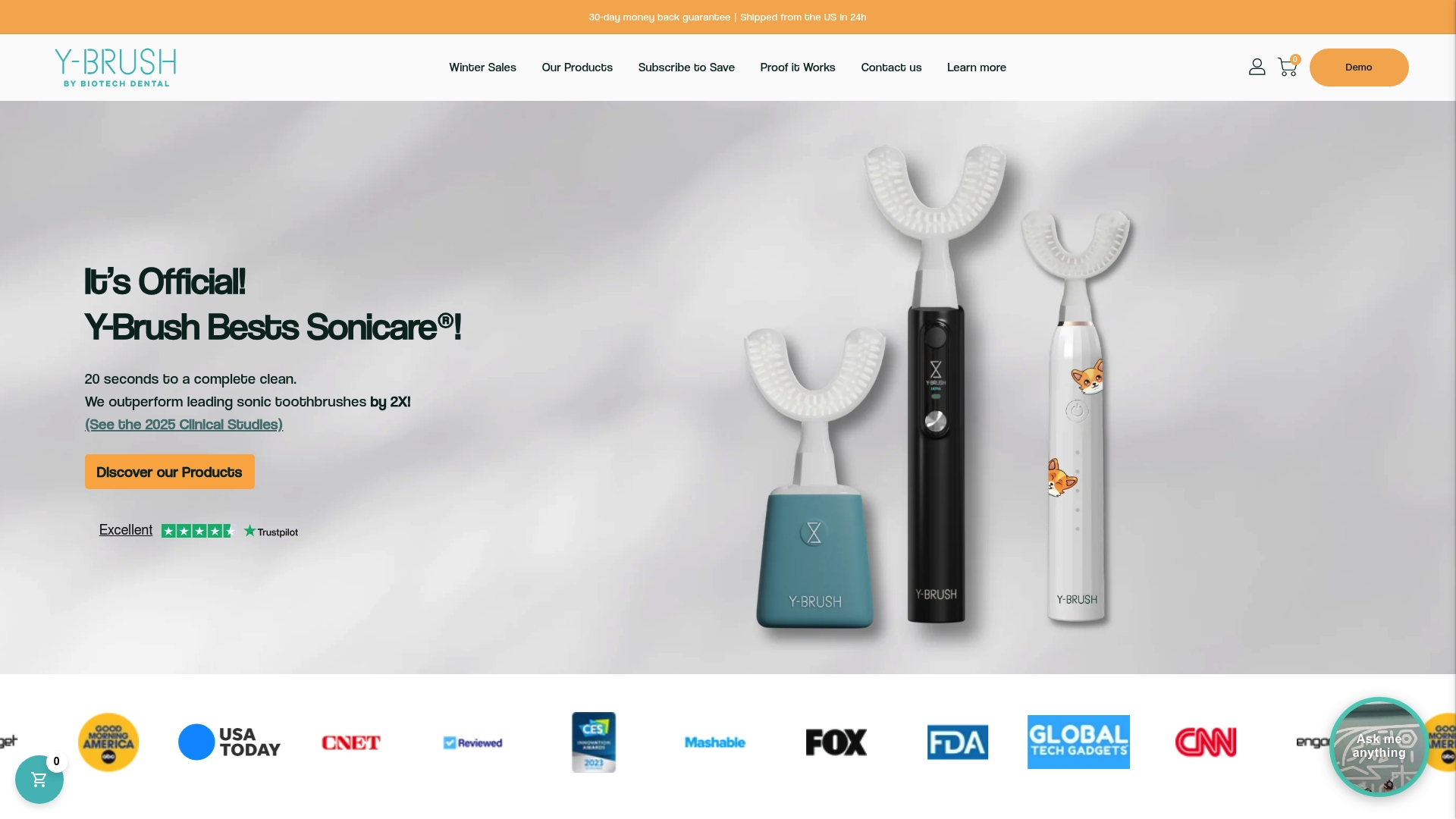
Our membership plans include regular refills, so you are not guessing when to swap your brush head. Current plans are the Core Plan at $29.90 per quarter, the Pro Plan at $49.90 per quarter and the Pro+2 Plan at $69.90 per quarter. You can compare the Y-Brush plans and toothbrushes or browse brush heads and the full range, including compatible heads for other brands.
When to see a dentist
Home care is the foundation, but some signs call for a professional. Book a dental visit if your gums are swollen, red or bleed when you brush, if bad breath persists after you restart a consistent routine, or if you notice hard deposits along the gum line. Tartar can only be removed by a dental cleaning, so a hygienist is the right person for that. If you have gum disease, diabetes or another condition that affects your mouth, ask your dentist how often you should be seen.
FAQ
Is it bad to forget to brush your teeth once?
One missed session is unlikely to do lasting harm. Plaque simply stays on your teeth a little longer. Brush as soon as you remember, and return to brushing twice a day. The concern is repetition, because plaque left in place can harden into tartar.
What happens if you go three days without brushing?
Plaque builds up, and per Healthline it can begin to decalcify dentin after about 48 hours without proper brushing. Gums may become irritated, and breath can worsen. Restart brushing and cleaning between your teeth right away. If gums bleed or feel sore for more than a few days, see a dentist.
How can I remember to brush at night?
Attach it to a step you never skip, such as plugging in your phone, and keep your toothbrush and toothpaste visible on the sink. A built-in timer also makes the task feel short and finite. Many powered brushes include one.
Should I brush longer if I missed a session?
Yes, within reason. A dentist quoted by Well+Good suggests brushing longer instead of harder, with a make-up session of at least two minutes. Use a soft-bristled brush and gentle pressure, and clean between your teeth as well.
Should I brush right away after acidic food or drinks?
Not immediately. Mayo Clinic advises waiting about an hour after foods or drinks high in acid, such as soda, citrus or sour candies, because brushing too soon can take enamel off. Rinse with water in the meantime if you like.
Sources
- Americans forget to brush 5x/week, survey finds (Dentistry IQ)
- Americans care about oral health, but miss connection to whole body health (Ipsos)
- Brushing your teeth: How often and when? (Mayo Clinic)
- What Happens When You Don’t Brush Your Teeth? (Healthline)
- Oral Hygiene (NIDCR)
- Plaque (MouthHealthy, ADA)
- Home Oral Care (American Dental Association)
- Travel Tips for Dental Health (MouthHealthy)
- Doing lunges while brushing your teeth, and other ways to build habits (AP News)
- Brushing: Information for Caregivers (NIDCR)
- Toothbrushes (American Dental Association)


